



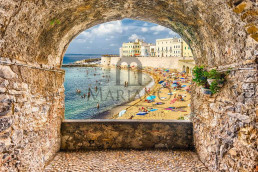
Discovering the Castles of Salento: Treasures of History and Architecture
Among the many jewels scattered throughout the Salento area, the castles undoubtedly stand out, evidence of a past marked by invasions, battles and foreign dominations. In this article we will explore some of the most fascinating castles in Salento, telling their history and importance.
A bit of history
Salento has a rich and complex history marked by various dominations, including the Byzantine (6th – 11th century), Norman (11th-12th century) and Aragonese (15th-16th century). Each of these has left a significant mark on the culture, architecture and traditions of the region. In particular, the domination closest to our times, namely the Aragonese, strengthened the coastal defenses against Ottoman incursions, building watchtowers and strengthening the existing fortifications. The Turkish invasions in Salento are an important and dramatic chapter in the history of this region. These attacks, which intensified between the 15th and 16th centuries, had a devastating impact on the local population and left deep scars in the collective memory.
Eastern, transalpine and Spanish traditions have learned to coexist over the centuries, bringing an influence on local culture and traditions, also visible in architecture and art.
The Aragonese Castle of Otranto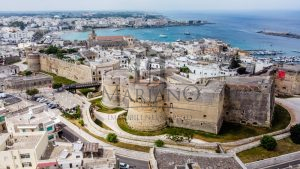
The Aragonese Castle of Otranto is one of the most significant monuments of the city, with a rich history that reflects the various dominations and influences that have characterized Salento over the centuries.
The first fortifications of Otranto date back to the Byzantine period, but the structure we know today has undergone numerous expansions and modifications over the centuries. During the Norman domination, Otranto became an important military and commercial center, and the fortifications were strengthened to protect the city from external attacks.
Under the Swabian rule of Frederick II, the castle was further strengthened. However, it was during the Angevin domination that a significant expansion of the defensive structures was seen, due to the growing threats from the East.
The castle underwent its most significant transformation during the Aragonese domination in the 15th century. Ferdinand I of Aragon, after the devastating Turkish siege of 1480, ordered the reconstruction and expansion of the castle to make it an impregnable fortress.
Structure and Defenses
The Aragonese Castle of Otranto has an irregular pentagonal plan, with corner bastions that strengthen its defense. The structure is surrounded by a deep moat, a common element in Aragonese fortifications to prevent direct access to the walls.
• Circular Towers: The bastions at the corners are surmounted by circular towers that allowed for better defense against artillery attacks. These towers are equipped with loopholes and gun ports.
• Access Gate: The main entrance is protected by a massive door with a drawbridge, a typical element of medieval fortifications that guaranteed an additional level of security.
• Internal Courtyard: Inside the castle, there is a large courtyard surrounded by buildings that housed the troops, warehouses and other structures necessary for the life of the garrison.
Architectural Elements
The architecture of the castle is characterized by a combination of defensive and decorative elements that reflect the various cultural influences of the period.
• Massive Walls: The walls are built of local limestone, with a solid and resistant structure designed to withstand artillery attacks.
• Sculptural Decorations: Despite its predominantly defensive function, the castle also features decorative elements, such as heraldic coats of arms and sculptural motifs that celebrate the power of the Aragonese dynasty.
• Patrol Walks: On the perimeter walls, the patrol walks allowed soldiers to patrol and defend the castle from above, offering a panoramic view of the city and the sea.
Gallipoli Castle
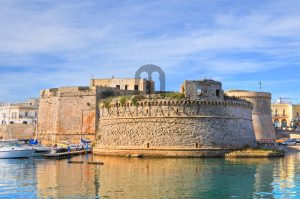 Gallipoli Castle is one of the most significant symbols of the city, strategically positioned at the entrance to the historic center. Its rich history reflects the various dominations that have characterized Salento over the centuries, highlighting an architecture that has undergone numerous changes and expansions throughout its existence.
The origins of the castle date back to the Byzantine period (6th-8th century), when Gallipoli was part of the territories of the Byzantine Empire. During the Norman domination (11th-12th century), the structure was expanded and strengthened, becoming an important defensive point against Saracen attacks.
In the 13th century, under the Swabian domination of Frederick II, the castle was further fortified. Subsequently, with the advent of the Angevins (13th-14th century), important expansion and renovation works were carried out to adapt the structure to new war techniques and defensive needs.
The castle underwent its most significant transformations during the Aragonese domination (15th-16th century). Ferdinand I of Aragon ordered the reconstruction of the castle after Gallipoli was involved in the wars between the Angevins and the Aragonese. The renovation and expansion works continued under the reign of Charles V, who adopted new military techniques to improve the defense of the city against Turkish incursions.
Structure and Defenses
The Gallipoli Castle has a quadrangular structure with four corner towers and a polygonal tower. Its strategic position on the water made it particularly difficult to attack.
• Corner Towers: The four cylindrical towers at the corners of the castle were equipped with arrow slits and gun ports for defense against artillery attacks.
• Polygonal Tower: The polygonal tower, known as the Rivellino Tower, was added during the Aragonese period and is one of the main architectural features of the castle.
• Moat and Drawbridge: The castle was surrounded by a moat, which separated it from the mainland, and the main entrance was protected by a drawbridge.
Architectural Elements
The architecture of the castle combines defensive elements with decorations that reflect the various historical periods.
• Mighty Walls: The thick walls made of local limestone were designed to withstand artillery attacks.
• Heraldic Decorations: On the walls and inside the castle there are coats of arms and heraldic symbols that celebrate the power of the noble families and sovereigns who governed Gallipoli.
• Internal Courtyard: The central courtyard of the castle was surrounded by various buildings that housed the troops, kitchens, warehouses and stables.
Copertino Castle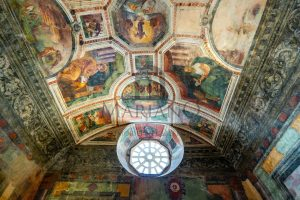
Copertino Castle is one of the most important and best preserved castles in Salento, located in the city of Copertino, in the province of Lecce. Its history reflects the political and military events of the region, while its architecture represents a significant example of Renaissance fortification.
The origins of the castle date back to the Norman period, between the 11th and 12th centuries. Initially, there was a Norman tower, probably built on pre-existing Byzantine ones. This tower was the nucleus around which the castle subsequently developed.
During the Angevin domination (13th-14th century), the castle was expanded and further fortified. With the arrival of the Aragonese in the 15th century, the castle underwent significant transformations. Alfonso of Aragon, in particular, ordered important expansion works to adapt the structure to the new defensive needs imposed by the introduction of firearms.
The current configuration of the castle is largely due to the Renaissance period. In the 16th century, the castle was expanded and transformed by the Castriota-Scanderbeg family, descendants of the Albanian hero Giorgio Castriota Scanderbeg. The architect Evangelista Menga was commissioned to renovate the castle, giving it the imposing and fortified appearance that we can still admire today.
Structure and Defenses
The Copertino Castle has a quadrangular plan, with bastions at the corners and a large moat surrounding it.
• Corner Bastions: The four spear-shaped corner bastions (called “a puntone”) are characteristic of Renaissance fortifications and were used to improve defense against firearms.
• Moat and Drawbridge: The moat completely surrounds the castle and was originally filled with water. The main entrance is accessible via a drawbridge, which could be raised in the event of an attack.
• Internal Courtyard: Inside the castle there is a large central courtyard, around which various residential and military buildings are arranged.
Architectural Elements
The architecture of the castle combines defensive elements with aesthetic characteristics typical of the Renaissance.
• Entrance Portal: The main portal is decorated with Renaissance motifs and has a round arch.
• Balconies and Loggias: Some internal balconies and loggias are adorned with elegant stone decorations, reflecting the Renaissance taste for aesthetics and symmetry.
• Rooms and Halls: Inside, the castle houses numerous rooms and halls, some of which are frescoed and decorated with heraldic crests and floral motifs.
Norman Tower
The Norman tower, dating back to the original period of the castle, is still visible and represents the ancient heart of the structure. This tower was integrated into the subsequent architectural modifications, becoming a symbol of the historical continuity of the castle.
Acaya Castle
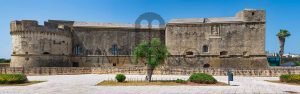 Acaya Castle is a notable example of Renaissance military architecture located in the homonymous village of Acaya, in Salento, in the province of Lecce. The fortress has a long history that reflects the political and military transformations of the region and represents one of the best preserved castles in Salento.
The origins of the castle date back to the 13th century, when a watchtower was built during the Norman-Swabian domination. However, the current configuration of the castle is mainly due to the expansion and fortification works carried out between the 15th and 16th centuries.
During the Aragonese domination, the castle underwent important fortification works. In particular, the architect Gian Giacomo dell’Acaya, son of Alfonso dell’Acaya, was commissioned to transform the tower into a modern Renaissance fortress.
In the 16th century, under Charles V, the castle was further strengthened to defend the territory from Ottoman attacks. Gian Giacomo dell’Acaya designed a system of bastions and walls that made the fortress impregnable according to the canons of Renaissance military architecture.
Structure and Defenses
Acaya Castle has a quadrangular plan with corner bastions and a large moat surrounding it, reflecting the most advanced fortification techniques of the Renaissance.
• Corner Bastions: The four corner bastions, shaped like a spearhead, are designed to withstand attacks from firearms and to offer a wide field of fire to the defenders. These bastions are equipped with gun ports and arrow slits.
• Moat and Drawbridge: The castle is surrounded by a moat, originally filled with water, which constituted a first line of defense against attacks. The main access to the castle was via a drawbridge, which could be raised to prevent enemies from entering.
• Inner Courtyard: At the center of the castle is a large courtyard, around which are arranged various residential and service buildings, including barracks, kitchens and warehouses.
Architectural Elements
The architecture of the castle combines defensive elements with aesthetic features typical of the Renaissance.
• Entrance Portal: The main portal is decorated with Renaissance motifs and features a round arch with coats of arms and sculptural decorations.
• Balconies and Loggias: Some internal balconies and loggias are adorned with elegant stone decorations, reflecting the Renaissance taste for aesthetics and symmetry.
• Rooms and Halls: Inside the castle, there are numerous rooms and halls, some of which are frescoed and decorated with coats of arms and floral motifs.
The Castle of Charles V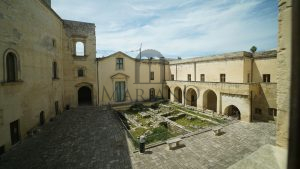
The Castle of Charles V in Lecce is one of the main fortresses of the city, a symbol of military and political power in Salento during the Renaissance period. This castle represents an important testimony to the history and military architecture of the 16th century.
The origins of the castle date back to the Middle Ages, with a first fortified structure built by the Normans in the 12th century. However, the current configuration of the castle is the result of a complete renovation and expansion commissioned by Emperor Charles V in the 16th century to improve defenses against Turkish incursions.
During the Aragonese domination, the castle underwent various fortification interventions. The most significant transformation occurred under the reign of Charles V and his viceroy, Don Pedro da Toledo, in 1539. The military architect Gian Giacomo dell’Acaya was commissioned to design the new castle, which was to be an imposing and modern structure according to the canons of Renaissance military architecture.
Structure and Defenses
The Castle of Charles V has a trapezoidal plan with four corner bastions that give the structure a massive and imposing appearance.
• Corner Bastions: The four corner bastions, called San Giacomo, Santa Croce, Sant’Antonio and Sant’Antonio Abate, are designed to withstand attacks from firearms. The bastions are equipped with embrasures and slits for positioning artillery.
• Moat and Drawbridge: The castle was originally surrounded by a moat, which increased defenses against attacks. The drawbridge allowed access to the castle and could be raised in case of attack.
• Inner Courtyard: The inner courtyard is large and surrounded by buildings that housed the troops, kitchens, warehouses and other structures necessary for the life of the garrison.
Architectural Elements
The architecture of the castle combines defensive elements with aesthetic characteristics typical of the Renaissance.
• Entrance Portal: The main portal, decorated with Renaissance motifs and heraldic coats of arms, represents the monumental entrance to the castle.
• Balconies and Loggias: Some internal balconies and loggias are adorned with elegant stone decorations, reflecting the Renaissance taste for aesthetics and symmetry.
• Rooms and Halls: Inside the castle, there are numerous rooms and halls, some of which are frescoed and decorated with heraldic coats of arms and floral motifs.
Square Tower
Inside the castle there is a square tower that represents one of the original structures of the medieval castle. This tower was integrated into the subsequent architectural modifications, becoming a symbol of the historical continuity of the castle.
Contemporary use of castles
Castles frequently host temporary art exhibitions, ranging from contemporary art to historical exhibitions.
They are also used as locations for various festivals and cultural events, such as those dedicated to the promotion of reading and literature, with book presentations, meetings with authors and workshops for children and adults.
During the summer they host classical, jazz and pop music concerts, as well as theatrical performances and dance shows.
Castles are venues for conferences and seminars on various cultural, historical and scientific topics, supported by various educational activities, which make them important educational centers, with initiatives aimed at schools and families:
Multimedia technologies are also used to enrich the visitor experience, through interactive exhibitions and virtual visits.
Cultural collaborations are organized, such as exchanges of exhibitions and projects with museums and art galleries at national and international level, and community projects, such as Initiatives involving the local community, promoting active participation and the enhancement of cultural heritage.
Conclusions
The castles of Salento represent a heritage of inestimable value, living testimonies of a past rich in history and culture. Each castle has a unique story to tell, made of conquests, transformations and adaptations to the needs of various historical periods. Visiting these castles means not only admiring their architectural beauty, but also immersing yourself in a journey through time that allows you to rediscover the deep roots of Salento.
If you are passionate about history and architecture, or simply want to explore fascinating and evocative places, the castles of Salento are an unmissable destination. Prepare yourself to live an unforgettable experience within the walls of these ancient fortresses.


Illuminating Guide: Exploring the Allure of Lighthouses
Lighthouses stand majestically guarding the seas, resisting even the worst storms, and have always captured the collective imagination. It is incredibly evocative to observe a lighthouse perched overlooking the sea from below. It tickles the idea of visiting it, climbing hundreds of steps to admire, once at the top, a breathtaking panorama that disappears into the horizon, where sea and sky merge.
Icons of Design and Architecture
Today many lighthouses are in disuse and have become artistic and cultural heritage to be preserved, works of architecture and ingenuity, some are true masterpieces, as lighthouses are not only useful navigation tools, but are also spectacular examples of design and architecture. From the majestic granite towers of European lighthouses to the elegant wrought iron structures of American lighthouses, each lighthouse carries with it a unique history and a timeless charm. Every detail, from the spiral staircases that climb to the top to the intricate gear systems that regulate the lamps, is a testament to human ingenuity and craftsmanship.
Historical Treasures
However, in ancient times, the safety of shipwrecked people and villages was entrusted to them and their guardians. In the event of attacks from the sea, they also served as coastal towers and the guardians, like sentries in outposts, were the first to be able to raise the alarm. Originally, lighthouses were simple bonfires or torches kept lit to signal landing areas.
There are testimonies that date back far in time that tell the myth of lighthouses. Virginia Woolf, in her 1927 novel “To the Lighthouse”, describes them as follows: «The Lighthouse was then a silvery, cloudy tower, with a yellow eye that opened suddenly and softly in the evening». Homer, in the 19th book of the Iliad (8th century BC), compares the flash of the shield of the great Achilles to "one of those fires that from the heights make the way safe for sailors".
Lighthouses become a true myth with the ancient authors. Ovid, in the "Heroids", a collection of 21 letters of love or grief imagined as written by famous heroines to their husbands or lovers.
When, in 1200, the Phoenicians arrived in the Mediterranean with the need to increase maritime trade, the need arose to extend the times of navigation even during the night. Thus, the construction of tower scaffolding was improvised along the coasts, where baskets with bonfires were positioned, guarded by men in charge of keeping the fire lit.
The first two wonderful lighthouses of antiquity date back to 300 BC. One of them is the Colossus of Rhodes, a gigantic bronze statue thirty-two meters high located at the entrance to the port of Mandraki. It represented the god Helios, protector of Rhodes, who carried a lighthouse in his right hand. It remained guarding the island for sixty-seven years, before being destroyed by an earthquake.

The second lighthouse is the Lighthouse of Alexandria, which remained operational until the 9th century, before it too was destroyed by earthquakes. It was built to increase the safety of maritime traffic, which was made dangerous by the sandbanks at the entrance to the port of Alexandria. The lighthouse stood on the island of Pharos (Lighthouse), from which it takes its name. It consisted of a high quadrangular base that housed the staff's rooms and the ramps for transporting fuel. Above the base stood an octagonal tower, followed by a cylindrical construction surmounted by a statue of Zeus, later replaced by that of Helios. The construction of the lighthouse made it possible to signal the position of the port to ships during the day, with the use of special polished bronze mirrors that reflected the sunlight, and at night, with the lighting of fires. It is estimated that the tower was 134 meters high and visible from 48 km away. Given its usefulness, lighthouses began to be built in many other places in the Mediterranean.
Later, the Romans also spread the construction of stone towers with fire at the top throughout their imperial conquests. These towers were also adopted by the four Lordships of the Maritime Republics in Italy, located near the ports. After the collapse of the Roman Empire, the bell towers of monasteries built on top of rocks took on this function, especially in northern Europe. During the Renaissance and Baroque periods, wonderful castle-like lighthouses were built in France and England, at the entrance to the English Channel, located in the middle of the sea but not very functional.
Between the end of the 18th and 19th centuries, lighthouses took on the connotation we know today. The New York Lighthouse, donated by France to the United States and known as the famous Statue of Liberty, was the first lighthouse in the United States, operated by the American Lighthouse Service, and remained in operation until 1902. It was also the first lighthouse to be electrified, in the late 1800s.
Before the advent of oil and then electricity, the substances used to fuel the lighthouse fires were varied: wood, coal, spermaceti candles (the fatty material found inside the skull of sperm whales and which burns without producing smoke), whale oil and olive oil, depending on the latitude.
It can be said that, throughout the world, no two lighthouses are the same. Each has its own peculiar characteristics. Their external appearance serves to identify them from afar during the day, while at night their light sends distinctive signals: light - eclipse, eclipse - light, with a specific frequency that allows the structure to be recognized in the dark. In the portolans, the manuals that are carried on board and that indicate all the information about the coasts and their dangers, each lighthouse is described with its particular light.
The Sentinels of Salento
In the Italian peninsula, with a coastline of about 7,458 km, there are beautiful lighthouses with fascinating stories, many of which have become highly sought-after tourist destinations.
The region that boasts the most fascinating locations, as well as those most sought after by tourists, is Puglia, with the Punta Palascìa Lighthouse in Otranto and the San Cataldo Lighthouse in Lecce, considered the two most beautiful in Italy; and those of Santa Maria di Leuca and the island of Sant’Andrea in Gallipoli, renowned for their height, which are all part of Salento.
The Punta Palascìa Lighthouse
The Punta Palascìa lighthouse is certainly the most renowned, not only nationally but also internationally: it is one of the 5 Mediterranean lighthouses protected by the European Commission.
Built in 1867 on the remains of a previous watchtower, it is 32 meters high and stands on a rocky promontory, overlooking the sea, in the easternmost point of Italy, better known as Capo d'Otranto.
Sometimes, if you are lucky, you can even see the mountains of Albania in the distance, which make the breathtaking panorama even more magical.
The lighthouse, managed by the Italian Navy and used as a meteorological station, remained in operation until the 1970s, after which it was abandoned. Starting in the 2000s it underwent a restoration project; since 2005 it has returned to illuminate, with its light, the darkness of the nights of Otranto.
Inside, a spiral staircase composed of 150 steps leads to the top, where the jewel of the lighthouse is kept: its lantern. The latter comes directly from Paris and bears the signature of Augustine-Henry Lepaute, a favorite student of the famous French engineer Gustave Eiffel.
Built in 1884, it emits a light signal visible up to 18 nautical miles and until the 1960s it was powered by oil; now, however, a solar cell.
At the foot of the lighthouse, a structure that, for years, served as a home to those who were entrusted with the custody of the place, the guardians.
A short distance away, the Multimedia Museum of the Sea was also set up, inside which it is possible to discover the typical flora and fauna of the area.
The San Cataldo Lighthouse
What makes the San Cataldo lighthouse unique and priceless is the place that hosts it: an inlet ten kilometers from the city of Lecce, which preserves the remains of an ancient pier commissioned by the emperor Hadrian in the 2nd century AD and which, for this reason, took the name of "Porto Adriano", at the time when the city of Lecce was a Roman colony called 'Lupiae'.
Its current name, according to legend, derives from an Irish monk who, returning from Jerusalem, was shipwrecked in this area and miraculously saved himself. The lighthouse consists of an octagonal tower just over 23 meters high and a masonry structure that was originally intended to house the lighthouse keepers and a warehouse, today the seat of the local maritime office. Its light beam is visible up to 5 miles.
The construction of a lighthouse in San Cataldo was proposed in 1863 by the Provincial Council of Terra d'Otranto to the Ministry of Public Works. The first project was presented in 1865, and while waiting for the construction of the lighthouse, which was activated in 1897, a temporary lighthouse was installed on top of a municipal building.
The Lighthouse of Santa Maria di Leuca
The second tallest lighthouse in Europe is also octagonal in shape, and it is the imposing lighthouse of Santa Maria di Leuca, which with its 47 meters of height rises on the top of Punta Meliso, a few steps from the Basilica "de Finibus Terrae".
It was designed by the engineer Achille Rossi in 1864, where an ancient Saracen tower previously stood.
Its lantern, in operation since 1866, has a diameter of 3m, is made up of 16 lenses, of which 6 are free and 10 are obscured. These lenses project beams of white light visible up to 50 km away, alternating with beams of red light that warn sailors of the dangerous shallows of the Ugento sea.
Inside the structure there are 4 accommodations of which 3 are used by the lighthouse keepers and one is used as an inspection room, engine room and radio beacon room.
To reach the top of the lighthouse you have to go up a spiral staircase, composed of 254 steps. But once you have left the last step behind you, the view that you find in front of you makes you forget any effort: the blue of the sea that embraces the blue of the sky, and if you are a little lucky, the coasts of the island of Corfu and the mountains of Albania that appear on the horizon.
 The Lighthouse of Sant’Andrea
Equally enchanting is the landscape that forms the backdrop to the lighthouse on the island of Sant’Andrea, an uncontaminated natural paradise of about fifty hectares just a few kilometers from Gallipoli.
46 meters high and lit for the first time in 1866, the lighthouse remained abandoned for many years; recently renovated, since 2005 it has resumed illuminating the Ionian waters with its lantern, capable of reaching a distance of 20 miles.
Only the sound of the waves of the sea breaks the silence that reigns on the island, today completely uninhabited.
The same sea that every night witnesses the awakening of these gentle giants, ready to watch over, each from their own position, the lives of those who find themselves, for one reason or another, sailing its waters.
About 46 meters high, the lighthouse on the island of Sant’Andrea is among the highest in Europe, although the low altitude of the island, which does not exceed 3 meters above sea level, can be misleading. Known since the times of the Kingdom of Naples with the Messapian name of Achtotus, or arid land, the island was named after Sant’Andrea in 1591, due to a Byzantine chapel dedicated to the saint.
At the foot of the lighthouse, a teeming universe lives undisturbed, without the cumbersome presence of humans. The approximately fifty hectares of land on the island, part of the Regional Natural Park of the Island of Sant’Andrea and the Punta Pizzo Coast, are home to colonies of wild rabbits and the elegant Corsican gull, which has chosen the island as its only nesting site in Italy, an arid and rocky landscape, but refreshed by the presence of rushes and glasswort. About a mile from the mainland, the island has a completely different and unique ecosystem, which allows it to offer shelter to storks and herons during migration and to be populated by shrimp and other molluscs in the many lakes that spontaneously infiltrate between the rocks.
A wonderful natural oasis, recognized as a natural habitat of community importance and identified as a protected natural area by a regional law of Puglia in 1997, classified as being of particular historical and artistic interest by the Ministry of Cultural Heritage and Activities.
Abandoned to the waves and storms until 2005, the lighthouse has been renovated but today no keeper lives there. The Gallipoli lantern is automatic and the island itself is not accessible or available for moorings and landings not previously agreed with the Port Authority.
Conclusions
In conclusion, lighthouses are not just historical monuments or simple navigation tools; they are symbols of human perseverance, architectural beauty and connection with the sea.
Through their imposing presence and fascinating stories, lighthouses continue to enchant and inspire those who visit them, offering a unique opportunity to discover the enchantment of the maritime world.

Real Estate Investments in Lower Salento: Analysis of the Local Real Estate Market for Investments in Historic Properties
Basso Salento, a sub-region located in the southern part of Puglia, is emerging as an area of great interest for real estate investments, especially for historic properties. This area, characterized by a rich cultural and natural heritage, offers unique opportunities for those who want to invest in properties with historical and architectural value. In this article, we will analyze the real estate market of Basso Salento, with a focus on the returns and potential future developments for investments in historic properties.
The context of the real estate market in Basso Salento

Attractions of Basso Salento
Basso Salento is known for its charming historic cities and villages, including Lecce, Otranto, Gallipoli and Santa Maria di Leuca. These urban centers are characterized by buildings in Lecce stone, baroque churches, castles and historic buildings. The historical charm, combined with a privileged geographical position between the Ionian Sea and the Adriatic Sea, makes Basso Salento a popular tourist destination, with a constant flow of Italian and international visitors.
The Real Estate Market
In recent years, the real estate market in Lower Salento has seen significant growth, driven mainly by the demand for second homes and properties intended for tourist rental. Investors are attracted by the prices that are still relatively affordable compared to other Italian regions, as well as by the potential for enhancing the value of historic properties.
 Historic Property Investments
Historic Property Characteristics
Historic properties in the Lower Salento include masserie, palaces, courtyard houses and watchtowers, often surrounded by olive groves and vineyards. These properties not only represent an investment in terms of property value, but also offer the possibility of preserving and enhancing the local cultural heritage. The restoration and redevelopment of these properties require specialist skills and can benefit from tax incentives and public funding.
Investment Returns
Investments in historic properties in the Lower Salento can generate attractive returns, especially if the properties are used for tourism. The rental of holiday homes, bed & breakfasts and agritourism is a major source of income for investors. The growing popularity of Salento as a tourist destination has led to an increase in rental rates, with returns that can vary from 5% to 10% per annum, depending on the location and condition of the property.
Success Stories
Several restoration and redevelopment projects in the Lower Salento have demonstrated the potential for success of investing in historic properties. An example is the renovation of farmhouses transformed into luxury resorts, which have attracted an international clientele and significantly increased the value of the properties. Historic buildings in urban centers, repurposed as prestigious accommodation or residential facilities, have also recorded considerable appreciation.
Potential future developments
Market trends
Future trends in the real estate market in Lower Salento indicate a further increase in demand for historic properties, supported by initiatives to enhance the territory and by policies to encourage tourism. The growing attention towards sustainable tourism and ecotourism could encourage investments in structures that integrate heritage conservation with eco-friendly practices.
Financing opportunities and incentives
Investors can benefit from various financing tools and incentives offered at national and regional level for the redevelopment of historic properties. These include non-repayable grants, tax breaks and low-interest loans, which can significantly reduce restoration costs and increase profit margins. (See: https://www.immobilinelsalento.com/agevolazioni-a-fondo-perduto-per-investimenti-immobiliari-in-salento-pia-e-minipia/)
Challenges and considerations
Despite the promising opportunities, investing in historic properties in Lower Salento presents some challenges. The restoration process can be complex, requiring careful planning and specialized skills. It is also important to consider the impact of local regulations on heritage protection and urban planning, which can influence the timing and costs of projects.
Conclusions
The Lower Salento represents a promising real estate market for investments in historic properties, offering attractive returns and long-term development potential. The charm of its cities and villages, combined with a growing tourist context, makes this area particularly attractive for investors who wish to combine economic profit with the valorization of cultural heritage. With an appropriate strategy and a good knowledge of the local market, investments in the Lower Salento can prove to be a profitable and sustainable opportunity
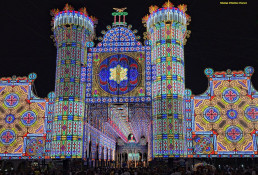
The magic of lights: the tradition of illuminations in Salento
Salento is famous for one of its brightest and most fascinating traditions: the luminarie. These spectacular light displays decorate cities and towns during religious holidays and special events, transforming the streets into real light shows. In this article, we will explore the origins, evolution, creation, installations abroad and the decorative use of luminarie in our homes.
Origins of Luminarie
Luminarie are an important cultural tradition admired throughout the world and represent a form of popular art that combines religious devotion and artistic creativity.
The term luminaria, from the Latin lumen, literally means "object that spreads light". Luminarie were made of papier-mâché and displayed during celebrations in the Renaissance, while in the Baroque period they were mounted on the facades of churches and cathedrals as a sign of devotion.
Originally, luminarie were nothing more than small oil lamps shielded by colored paper. The first prototypes can be found in the 16th century. Inspired by the designs for holiday decorations by artists such as Bernini, Fontana, Pietro da Cortona and even before Michelangelo, some artisans began to create structures illuminated with candles. The first evidence of illuminations in Puglia dates back to 1600, to accompany village festivals. Simple structures made up of poles and arches in fir wood, whose shapes recalled the Baroque style that was establishing itself in the region. Small glass containers with lamp oil and a wick for lighting were hung on the “parature”.
 Evolution of Illuminations
Over the years, illuminations have undergone a remarkable evolution. From candles and torches, we have moved on to using electric bulbs, allowing for greater safety and a greater spectacularity. In the 60s and 70s, with the advent of technology, illuminations became increasingly elaborate, incorporating geometric, floral and baroque designs. In recent decades, technological innovations have led to the use of LED lights, which offer a wider range of colors and greater energy efficiency, allowing the creation of even more impressive installations.
How Are Luminarie Made
The creation of luminarie is an art that combines tradition and innovation. The process begins with the design of the drawings, which can include religious, floral, geometric or figurative motifs. These drawings are then transferred onto wooden or metal structures, which are then covered with LED lights or bulbs. The construction of the structures requires great craftsmanship and attention to detail to ensure stability and safety.
Luminarie are usually mounted on modular frames, which can be easily assembled and disassembled. This allows for flexibility in installation, adapting to different streets and squares. The end result is a series of arches, galleries and light panels that transform the environment into a breathtaking visual experience.
 Illuminations, Religion and Pagan Festivals
Since ancient times, light has symbolized the divine presence in Christian countries, and candles were lit to illuminate places of worship during the most important liturgical celebrations. In the Renaissance, illuminations began to be displayed outside religious buildings, especially during the celebrations of nobles, who wanted to highlight their wealth. Every year, many cities and towns in Salento organize illumination shows, especially during religious festivals or cultural events. Illuminations are installed along the main streets, in squares and around churches, creating magical and evocative atmospheres. Salento is the region in the South where this tradition is most widespread. Of all the places, Scorrano is certainly the most famous, so much so that it is considered the world capital of illuminations.
According to a legend, during a plague epidemic, Santa Domenica asked the inhabitants who had been healed thanks to her intercession to display a candle outside the window. In a short time, all of Scorrano was illuminated by the warmth of the small lights. From July 5, on the occasion of the patron saint's day, the town is filled with illuminated structures up to 40 meters high. The event begins with a suggestive artistic show, in which the lights, which give life to real "ephemeral architectures" light up to the rhythm of music. This show of colored lights is so famous that it attracts visitors from all over the world.
Installations Abroad of the Lights
In recent years, the Salento lights have gained international fame, finding space in artistic installations and events all over the world. Cities such as New York, Tokyo, London and Paris have hosted the spectacular creations of Salento master luminaries. These installations not only promote the tradition and art of Salento, but also become a means of cultural exchange, fascinating audiences of different nationalities and cultures.
A significant example is the installation of the Salento lights during the Festival of Lights in Lyon, France, where the streets of the city were transformed into a magical landscape of light, attracting thousands of visitors and celebrating the art of Italian light.
 Decorative lights
The charm and magic of the great luminous architectures of Salento can now be brought inside our homes, thanks to decorative lights.
These are light installations of various types, sizes and designs, designed to decorate and illuminate living spaces. They can be made with different materials, including wood, metal, glass and plastic, and are often characterised by intricate geometric, floral or abstract patterns.
The typologies present a very wide range of choice, which includes: table lamps, light garlands, pendant lamps, outdoor lanterns, wall decorations, etc.
Decorative lights serve various purposes, mainly related to the decoration and illumination of living spaces. Here are some of the main uses: creation of suggestive atmospheres, enhancement of spaces, decorations for special events, functional lighting, design elements, etc.
Conclusion
The tradition of luminarie in Salento is a celebration of light, art and community. From its humble beginnings with candles and torches, it has become a spectacular expression of creativity and innovation. Whether large public installations or home decorations, luminarie continue to enchant and bring joy, representing a luminous link between the past and the present, and between Salento and the world.

Ecotourism and Sustainability in Real Estate
Introduction
Ecotourism and sustainability are increasingly relevant concepts in the real estate sector. These principles aim to reduce the environmental impact of construction and tourism activities, promoting responsible use of natural resources and improving the quality of life.
Sustainable Real Estate Projects in Salento
Salento is an excellent example of how sustainable architecture can be integrated with eco-tourism. Some examples of sustainable real estate projects in the area include:
- Eco-Friendly Masseria Salentina:

An eco-friendly masseria salentina is a typical agricultural company that stands out for its sustainable and environmentally friendly approach. These masseria often combine traditional Apulian architecture with modern eco-friendly technologies, offering an authentic and sustainable experience to visitors. Here are some aspects that characterize an eco-friendly masseria salentina:
Traditional Architecture:
- Local materials: use of Lecce stone, tuff and other local materials for construction and renovation.
- Design: preservation of original structures such as internal courtyards, thick walls and vaulted ceilings.
Sustainability:
- Renewable energy: installation of solar panels for electricity production and water heating.
- Energy efficiency: use of thermal insulation systems to reduce energy consumption.
- Water management: rainwater collection systems and use of low-consumption irrigation technologies.
- Organic agricultural production:
- Vegetable gardens and orchards: cultivation of vegetables, fruit and aromatic herbs without the use of pesticides and chemical fertilizers.
- Local products: production of olive oil, wine, cheese and other typical products of Salento following sustainable practices.
- 0 km cuisine
- Seasonal menu: use of fresh and seasonal ingredients from the farm itself or from local producers.
- Traditional cuisine: preparation of typical Salento dishes with particular attention to quality and sustainability.
Guest Experiences:
- Ecotourism activities: guided walks, bike tours, cooking classes, craft workshops and tastings of local products.
- Wellness: offering services such as yoga, massages and holistic treatments in a natural setting.
- Eco-Resort in the Natural Park:
 Located in the heart of Puglia, the Salento Regional Natural Park is a protected area that extends along the Ionian and Adriatic coast, characterized by rich biodiversity, breathtaking landscapes and a unique cultural heritage. The creation of an eco-resort in this region offers the opportunity to promote sustainable tourism that enhances the natural and cultural resources of the area.
Vision: to become a reference point for sustainable tourism in Salento, offering a unique experience that combines comfort, sustainability and immersion in nature.
Mission:
- Promote the conservation of the natural environment and local biodiversity.
- Offer high-quality accommodation and services in harmony with the environment.
- Educate guests on the importance of sustainability and conservation.
- Support the local economy through the use of local resources and labor.
Resort Features
Sustainable Architecture:
- Use of local and recycled materials.
- Bioclimatic design to reduce environmental impact.
- Renewable energy systems (solar panels, wind).
Accommodations:
- Ecological bungalows built with sustainable materials.
- Rooms with panoramic views of the natural park.
- Luxury suites immersed in nature.
Services:
- Restaurant that uses organic and 0 km products.
- Spa and wellness center with natural treatments.
- Guided excursions in the natural park.
- Environmental education activities and workshops on sustainability.
Activities and Experiences
- Excursions and Trekking: Guided routes to discover the flora and fauna of the park, with the possibility of bird watching and nature photography.
- Water Activities: Kayak and snorkeling trips to explore the pristine coasts and marine life.
- Culture and Tradition: Visits to local historical and cultural sites, tastings of typical products and participation in traditional events.
Sustainability and Conservation
Resource Management:
- Collectin and use of rainwater.
- Waste reduction and recycling programs.
- Use of renewable energy to reduce CO2 emissions.
Biodiversity Conservation:
- Collaboration with local authorities and environmental associations for the protection of habitats.
- Projects for the restoration of degraded areas.
- Monitoring and research on local fauna and flora.
Economic and Social Impact
Support for the Local Economy:
- Collaboration with local producers and artisans.
- Creation of jobs for the local community.
- Promotion of responsible tourism that respects the traditions and cultural identity of Salento.
Education and Awareness:
- Educational programs for schools and the community.
- Workshops and seminars on sustainability and conservation.
- Awareness campaigns aimed at the resort guests.
- Sustainable Agritourism:
Sustainable agritourism in Salento is an ideal option for those who want a holiday immersed in nature, respectful of the environment and local traditions. Salento offers many facilities that focus on environmental sustainability and authentic hospitality. Here are some common characteristics and tips for finding sustainable agritourism in Salento:
Characteristics of Sustainable Agritourism
- Use of Renewable Energy: Many agritourisms use solar panels, geothermal systems or other renewable energy sources to reduce environmental impact.
- Organic Farming: Sustainable agritourisms often grow organic products, ensuring healthy and zero-mile food for guests.
- Water Saving: Rainwater recovery systems and efficient irrigation practices are common to minimize water waste.
- Eco-Friendly Materials: The construction and renovation of buildings often uses natural and local materials, reducing environmental impact.
- Respect for Biodiversity: These agritourisms protect and promote local biodiversity, creating habitats for wildlife and using native plants in the gardens.
- Environmental Education: They offer educational activities and workshops to raise awareness among guests about the importance of sustainability and nature conservation.
How to Find Sustainable Agritourisms
- Online Platforms: Websites such as Ecobnb, Agriturismo.it and Booking.com allow you to filter the properties based on sustainability criteria.
- Certifications: Look for agritourisms with sustainability certifications, such as the Bio mark or the Ecolabel certification.
- Reviews and Feedback: Reading reviews from previous guests can provide useful information about the sustainable practices of the properties.
Tips for Making a Home More Eco-Friendly
For those who want to make their home more eco-friendly, here are some practical tips:
- Thermal Insulation:
- Improve the insulation of walls, roofs and floors to reduce heat loss.
- Use eco-friendly insulation materials such as rock wool or cork.
- Renewable Energy:
- Install solar panels to produce electricity or heat water.
- Consider using geothermal heat pumps.
- Water Management:
- Install rainwater collection systems for garden irrigation.
- Use low-flow faucets and showers to reduce water consumption.
- Sustainable Materials:
- Choose recycled or low-impact construction materials.
- Use non-toxic paints and finishes.
- Energy Efficiency:
- Replace old windows with high-efficiency double-glazed models.
- Install energy-efficient appliances.
- Design and Planning:
- Design your home to maximize natural light.
- Consider the orientation of your home to optimize natural heating and cooling.
The Importance of Sustainability in Modern Real Estate
Sustainability in real estate is essential for several reasons:
- Reducing Environmental Impact:
- Sustainable construction reduces CO2 emissions, consumption of natural resources and waste production.
- Saving Money:
- Eco-friendly homes tend to be more energy efficient, reducing utility bills.
- Sustainable homes often have a higher market value and quicker time to sell.
- Health and Well-being:
- Sustainable buildings improve indoor air quality and reduce exposure to harmful chemicals.
- Designing for natural lighting and the use of natural materials contributes to the well-being of the occupants.
- Social Responsibility:
- Adopting sustainable practices demonstrates a commitment to protecting the environment and future generations.
- Real estate companies that invest in sustainability often enjoy a better reputation and attract more conscious customers.
Tips for a Sustainable Holiday
- Respect for the Environment: Reduce plastic consumption, recycle and save resources such as water and energy.
- Support the Local Economy: Buy local products and participate in activities offered by local communities.
- Sustainable Mobility: Use eco-friendly means of transport, such as bicycles or public transport, to explore the area.
Conclusion
Integrating sustainability into the real estate sector is not only an ethical choice but also a necessity to ensure a prosperous and environmentally friendly future. Projects such as those in Salento show how it is possible to combine tradition and innovation to create living and tourist spaces that respect nature and improve the quality of life.

 “I Giardini di Marzo”, a 17th-century rural complex to be restored, located in Castrignano del Capo, where there is already a restoration and funding project with Mini PIA for the creation of a tourist facility
  “Casa Calce”, an ancient residence in Bagnolo del Salento, with 12 rooms plus a garden, perfect for creating a B&B/guest house
  “La Dimora del Falconiere”, an ancient ducal residence for sale, dating back to the late 19th century, located in the heart of the lively town of Ruffano, with a garden and 16 rooms.
The Via Francigena in Salento: let's discover the itineraries between history, nature and architecture
Historically, Via Francigena, or rather Vie Francigene, refers to a group of streets that connected the territories dominated by the Franks (now France and Germany) to Rome in medieval times. Today we talk about Vie Francigene also to indicate those cultural itineraries towards Rome, intended for modern pilgrimage and sustainable tourism.

The saying "all roads lead to Rome" can ironically give an idea of how many Vie Francigene there are on a theoretical level. The history of this path has its origins in the Middle Ages, when pilgrims had to reach one of the peregrinationes majores, to get to Jerusalem, Santiago or Compostela. The pilgrims' journey, in fact, started from Southern Italy to reach Northern Europe or, on the contrary, began in Rome to reach Puglia, where they embarked for the Holy Land. In fact, pilgrims in the Middle Ages started from their home and traveled not only the 'road' network of the time, but also all those paths and pavements which least exposed them to the risk of assault or accidents but which at the same time passed through places where it was possible receive hospitality and food.
The Via Francigena in Salento extends along the heel of the boot for approximately 120 km: a journey into the culture of this strip of land which boasts countless unmissable stops, between the main cities such as Lecce and Otranto, the thousand-year-old city that looks to the East, admiring fascinating architectural works, passing through villages and countryside, where there is no shortage of ancient testimonies of pilgrimage stages.
Alto Salento, the origins of the route
 The route starts from the city, or rather from the port of Brindisi, and one of the symbolic elements are the Two Columns of the Appian Way, arrival for those who had to leave for the Holy Land, or departure for those who had to go to Rome. For a long time the columns were considered terminals of the Appian Way, but the placement of the columns on the rise overlooking the port of Brindisi, and the relationship with the view of the mouth of the same, demonstrate that they were raised with a celebratory intent, perhaps to support of two bronze statues.
Another obligatory stop for anyone passing through Brindisi is the Church of San Giovanni al Sepolcro, very ancient, from the Norman age (11th century), built on several layers of the city's history. It is a small re-enactment of the Holy Sepulcher in Jerusalem, with a circular plan to indicate the circularity of life and spirituality that rises upwards, accompanied by cycles of frescoes and carved capitals.

Continuing the journey, close to Torchiarolo, we find Valesio, an ancient city that was first Messapian, then Roman, then Byzantine, which remained in existence until the year 1000 AD. approximately as a medieval village, then uninhabited, literally crossed by the Via Traiana-Calabra. It is a very important city in antiquity, where many excavations have yet to be carried out, but in which many coins from various parts of the Mediterranean have been found so far, and this makes us understand that this place was the hub of exchanges, commerce and passage of people from many different places, which still has a lot to tell.
On the stretch of road that leads us from Valesio towards Surbo, we come across a historical-architectural asset of great value, which since 2012 has been managed directly by the FAI
 (Italian Environment Fund), namely the Abbey of Santa Maria a Cerrate.Dating back to the 11th century, although according to archaeological excavations was enlarged until it became one of the most important monastic centers in southern Italy: in 1531, when it came under the control of the Hospital of Incurables of Naples, the complex included, in addition to the church, stables, accommodation for the farmers, a well, a mill, two underground oil mills. The sacking of Turkish pirates in 1711 plunged the entire center into a state of complete abandonment which continued throughout the 19th century. Today, after a complex restoration, the Abbey can be visited again and represents a splendid example of Apulian Romanesque architecture embellished with important frescoes that make it unique in the Byzantine world. there were previous settlements, during the 12th century it was also a center of production (especially of cereals), and was inhabited by Byzantine monks who were fleeing from Turkish persecution in Byzantium. The locality was an important religious and cultural hub. the Abbey
In the countryside of Lecce, on the border with the municipality of Surbo, there is another very important stop on the Via Francigena Salentina, namely the Church of Santa Maria d'Aurìo.
 Dating back to the 12th century, it is the oldest architectural testimony of the medieval farmhouse of Aurìo, which disappeared between the 15th and 16th centuries. The church was another place that was crossed before arriving in Lecce, and in addition to being full of crosses, a distinctive and characterizing sign of the passage of pilgrims, it also has a series of boats engraved on its facade, and this is a sign that the pilgrims they were preparing for the journey to go to the holy land and had to cross the Adriatic. The vast majority of these travellers, especially those who came from northern Europe, had never seen the sea, and the experience of navigation was terrifying for them, because it happened that due to rough seas and storms, ships were shipwrecked and pilgrims died. drowned. The design of the ship was engraved almost like a votive offering, to ensure that the church protected their journey. In the event that they managed to arrive from the east to Salento, after crossing the stormy sea, the engraving became an ex-voto for the grace received.
From Lecce towards south Salento
At the entrance to Lecce we are welcomed by the former Olivetan Monastery, and the ancient monastery, more than a secluded place, was a strategic site, chosen in the 12th century by Tancredi d'Altavilla, the last Norman count of Lecce, to build a sumptuous religious complex, assigning it to the Benedictine Order. The abbey aroused amazement from the beginning due to its magnificence and the church, dedicated to Saints Niccolò and Cataldo, reached "the highest level" among medieval architecture in the Terra d'Otranto. In 1494 the Olivetans (Benedictines of Monte Oliveto) arrived, replacing the pre-existing community, now in extinction. While the church was preserved and enriched, the convent was rebuilt in majestic form.
 The Via Francigena passes through Lecce, where the Church of San Nicolò dei Greci is located in the historic center.
It is a Salento church built above an ancient church dating back to the 9th century, of which the ancient crypt and the apse part still exist. Ancient paintings are still present in the crypt. The small church was called the “Church of San Giovanni del Malazio” and at a certain point it had been abandoned. In the rear part of the church there is a cistern, which collected the waters of an aquifer of the Idume river, the river of Lecce.
Proceeding towards the fortified city of Acaya, and crossing the countryside of Melendugno, you arrive in the area of Grecìa Salentina, and one

of the places most frequented by travelers was that of Carpignano Salentino, where the baroque Parish Church from the 16th century stands out, which houses the Crypt of Santa Cristina dug into the tuff between the 8th and 9th centuries. The Crypt is the only place from this era where the client and the fresco painter are known, as their names are mentioned in the numerous writings in Greek that cover the walls of the crypt. The frescoes on the walls, which are more than a thousand years old, have been preserved very well and the crypt is the only case in the entire Mediterranean where we have such a wealth of data. This type of frescoes continues to remind us that at the time, for those crossing the Via Francigena, the main point of reference was Constantinople, where Greek was spoken.
We continue between ancient farms and a lush pine forest until we cross the village of Cànnole, where we find the Village of Torcìto, which was initially a village, then in the 12th
century it became a Masseria, to which over the years further structures were added, such as the dovecote tower and the Church dedicated to San Vito. The Masseria di Torcìto is surrounded by lush vegetation, which has accompanied it over the centuries, and which today has given life to the Torcìto Natural Park, much appreciated by trekking enthusiasts.
We then arrive at the eighteenth-century Sanctuary of Monte Vergine in Palmariggi, which houses a precious crypt from the Byzantine period, on whose eastern side there was an altar containing a half-length fresco of the Madonna with the Baby Jesus in her arms.
 Giurdignano follows with its "Megalithic Garden", an area rich in dolmens and menhirs, and we remember in particular the San Paolo Menhir, another stop on the Francigena route, where a crypt was excavated inside the rocky spur, probably from the Byzantine, inside which you can see a fresco representing the taranta, a poisonous spider that bit women, the so-called tarantate, of whom Saint Paul is the protector.
In the smallest municipality in the whole of Salento, Giuggianello, still between dolmens and menhirs, there is the ancient Masseria Quattro Macine, a Byzantine settlement dating back to the 7th century, attacked by the Turks over the years, rebuilt, used as a post station, tobacco factory, farm .
We then enter the gully of the Idro Valley, and pass through the Grotta di Sant'Angelo, a partly destroyed church-crypt, where some traces of the frescoes that decorated the walls of the cave are still evident, representing sacred figures, people in tunics, the faces of two women, and saints. Although the frescoes are difficult to identify today, the Sant'Angelo cave is undoubtedly one of the most evocative and interesting in the entire Idro valley.
We then head to the center of Otranto with the splendid Cathedral of S.Maria Annunziata, built on the remains of a Messapian village, a Roman domus and an early Christian temple, it was founded in 1068. It is a synthesis of different architectural styles including Byzantine, early Christian and Romanesque elements. The 13th century frescoes were almost all destroyed by the Turkish invasion of 1480. However, the precious mosaic floor remains intact, executed between 1163 and 1165, of great scenic impact due to the large decoration representing scenes from the Old Testament, chivalric cycles, medieval bestiaries. The images, arranged along the development of the Tree of Life, retrace the human experience from original sin to salvation. The crypt is very particular from an architectural point of view, which dates back to the 11th century and is a miniature of the famous Cistern of Theodosius or the Mosque of Cordoba. It has three semicircular apses and is characterized by forty-eight bays interspersed with over seventy columns, semi-columns and pillars. The singularity lies in the diversity of the support elements, coming from ancient and early medieval buildings, from the various figurative repertoire. The surviving frescoes which span a chronological span from the Middle Ages to the sixteenth century are of great value.
No less important is the Church of San Pietro, also in Otranto, it is one of the most representative medieval buildings of the South of the Byzantine building tradition and remains the highest and most vivid expression of Byzantine art in Puglia. The sacred building probably represented the first basilica of the city, elected metropolis in 968 and directly dependent on the patriarchal seat of Constantinople. Its dating has long been the subject of debate among scholars, but from the analysis of the structure, the frescoes and the inscriptions in Greek, it seems attributable to the 9th-10th century. In the three apses at the back there are splendid Byzantine-style frescoes dating back to the 10th-11th century

After passing Cocumola, where the Menhir of the Cross stands in Via Savoia 26, you walk among pine forests and olive groves up to Vignacastrisi.
It is then the turn of Andrano, in whose countryside we find the Crypt of Attàrico; it is believed that from the 8th to the 10th century the cave hosted Basilian monks, and two frescoes are still present. Initially as a refuge, and later as a spiritual hermitage, the monks in the meantime moved to the nearby abbey of Santa Maria del Mito, a cultural center and totally self-sufficient farm, located between the fiefdom of Tricase and that of Andrano.
The final destination
The route of the Via Francigena Salentina is almost over, and about 1 km from Santa Maria di Leuca, near today's Masseria Coppola, on the SS 275, the last stop was the ancient Cappella dei Lazzari, where illnesses were treated . Built in the 14th century. by the Grand Dukes of Tuscany for the Florentine sailors, who frequented the port of Leuca in large numbers, unfortunately it no longer exists.
 The last stop, and undoubtedly the most significant, is in Santa Maria di Leuca, at the Basilica – Sanctuary S. Maria de Finibus Terrae, which has its roots in the early days of Christianity. It stands where there had been the temple dedicated to the goddess Minerva of which, upon entering the church, on the right, an relic is preserved: the altar or a part of it, on which sacrifices were offered to the goddess. Tradition has it that the apostle Peter in 43 AD. he landed in Puglia to return to Rome after his journey to the East. On this occasion, the temple was dedicated to the Savior and
converted into a Christian sanctuary. It was precisely here, in fact, that Saint Peter began his work of conversion, starting from the Salento population and then continuing throughout the West. The testimony of the apostle's passage is the Petrina Cross placed in front of the Sanctuary. Only at a later time was it consecrated to Santa Maria di Leuca. Precisely because of its highly coveted position, the sanctuary was unfortunately targeted numerous times over time, in particular by the Turks and Saracens, as an indirect attack on the Christian religion. It was destroyed five times, the last of which in 1720. The numerous reconstructions obviously gave the Sanctuary a different appearance from the original one, but the faithful wanted to maintain the structure of the perimeter walls.
Conclusions
The path we followed takes us back in time thousands of years, and allows us to understand and discover the most ancient origins of the architectural beauties that dot the route of the Via Francigena Salentina, starting from small treasure chests, such as the crypts, up to arrive at immense treasures, such as abbeys and farms.
They are places that are still part of our present today, and which will enrich our future.
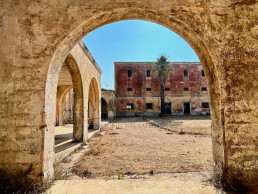
Rebirth of the former tobacco factories in Salento: a story of reuse and renewal
Introduction and diffusion of tobacco in Italy
The cultivation of tobacco in the heel of Italy has rather remote origins and has characterized the life of many families and farmers in Salento for a long time. According to sources, tobacco was grown as early as the eighteenth century. At the time, there were two types of tobacco: Kotor (dry-grown and irrigated) and Brazil (constantly irrigated). Both were used as snuff (mostly) and smoking (for the production of cigars), and were much appreciated by high society and the clergy of the time.
The very first tobacco growers were the mendicant friars, but it was the Venetian merchants and the Spanish who introduced it to the Terra d'Otranto. When the volumes produced became truly large, cultivation passed into the hands of the Kingdom of Italy. This happened at the beginning of the nineteenth century, when tobacco was widely spread in the Lecce countryside, in some villages down towards Capo di Leuca, but also towards Mesagne, Oria, Francavilla.
With the advent of the government tobacco monopoly, things changed. The farmers of Salento stopped seeing tobacco as a source of income: the real profit went to the landowners and the state. And the hours of work invested in tobacco production were so many that they did not receive adequate economic compensation. Among the varieties of cattaro in Salento, the one from Lecce stood out. It was a shorter plant than the others, with 22 leaves, the market particularly loved its fragrance and aroma. The village curly cattaro was also highly prized: its leaves were longer. In addition to these two types, others were soon added, coming from America, but also from Herzegovina.
The story would still be long and complex. But to be concise, let's get to the twentieth century. In this historical period, there were few families in the province of Lecce who had concessions for the cultivation and processing of tobacco. During the First World War, tobacco processing was entrusted to women, the famous "tabacchine", who were employed occasionally and without too many guarantees. It is no coincidence that there was no shortage of agitation to request that the amount of the piecework wage be revised.
The life of tobacconists and farmers of Salento
Over time, and also as a consequence of the olive and vine crisis of that period, the tobacco industry continued to expand. On the one hand it was an advantage: especially in the summer months, the cultivation of tobacco made it possible to significantly stem the problem of unemployment. On the other hand, tobacconists continued to receive a meager wage, with which they contributed minimally to the family income. And not only that: we almost always worked in precarious hygienic and sanitary conditions. Life in the tobacco factory was tough and the teacher (a female supervisor) made sure that no one spoke or wasted time in any way. The threat was always that of dismissal.
From sowing to harvesting, up to stringing the leaves
The cycle of tobacco cultivation by tobacconists in Salento began with the sowing process, which required expert hands, and took place in the so-called "ruddhre", i.e. a portion of land used for cultivation. This rectangle of land was worked to be leveled, with the rake, inside which an expanse of organic fertilizer was deposited. Subsequently, the tobacco seeds, mixed with the ash, were thrown onto the ground and then watered. Once ready for tobacco cultivation, they were uprooted from the root and then collected in "cascette", small wooden boxes, covered with a jute cloth and then transplanted onto new soil.
The harvest took place at the first light of dawn: a job that involved entire families, even children. In particular, 4 to 5 cycles were carried out to harvest the tobacco leaves, in order to perfectly clean the entire plant. All of this, approximately, in a week.
Once collected and arrived home, we sat in a circle and began the fundamental phase of threading, the "'nfilatura". This process consisted of threading the leaves along a large steel needle (the "cuceddhra") and then passing the string through the eye. Once all the threads were filled with tobacco leaves, they were hung on the frames and the sun drying phase could finally begin. The loom is called "tiralettu" and, once the sun set, they were brought into the house.
Once the tobacco was ready, it was delivered to the "Manifattura te lu tabbaccu" in wooden crates covered with jute sheets.
Processing in the tobacco factory
The tobacconists usually began their task towards the end of November when the tobacco leaves were now dry. They took care of their sorting, dividing them inside particular wooden crates by color and based on quality.
The tobacco leaves were put together and divided into small bunches and then pressed, while the other tobaccos formed the so-called "ballettes", arranged according to the weight and type of quality of the tobacco. Once this phase was completed we moved on to pressing, after which the leaves were placed in a wood stove to mature the tobacco with the heat.
There was a worker who supervised all these operations, or "the mescia" to check that there were no hitches or imperfections in the manufacturing processes. The balls were placed in a room in contact with sulphur, to avoid corrosion and after a few days placed in the warehouse for another inspection by the mescia. The tobacco leaves obtained were crumbled to create cigarettes and the tobacco obtained was taken to the Monopoly factories in order to evaluate the taste and flavor.
The sector is starting to show signs of suffering
From 1935 onwards, however, the sector began to show signs of suffering. The entire sector showed signs of decline for a wide range of reasons: the introduction of poor quality varieties, poor commercial capacity, the choice of unsuitable land, unfavorable weather conditions, poor preparation on the agricultural front, the lack of use of fertilizers and so on. Not to mention that the vine and olive tree were gaining ground. Towards the end of the 1930s the work began to be reorganised: from packaging methods to the processing of the leaves themselves, methods were changed and sometimes even a minimum of mechanization began to be introduced. These choices led to a reduction in manpower and necessary working hours, which resulted in a series of workers' revolts and trade union activities.
A recovery of the sector followed, thanks also to a series of measures issued specifically in favor of tobacco growers. We then reached the 1960s, when tobacco downy mildew appeared, a plant disease that seriously damaged the sector.
In 1970 the Monopoly regime fell: the tobacco growers were freed but, in fact, left in disarray. It was, in fact, the final blow to the sector, which ended its history in a short time.
Tobacco factories and their rebirth
A rather forgotten recent history, despite the socio-economic and cultural repercussions, which has left an incredible abandoned architectural heritage, today mostly in ruins in the Salento area. Many are buildings that go almost unnoticed, with a regular and simple structure, made of tuff, often also vaulted but small in size, sometimes newly built, and sometimes built on the basis of pre-existing buildings, such as farmhouses or farms. However, there are also warehouses larger than 1,000 m2 where the processing and storage of tobacco that flowed from extensive cultivations was concentrated. Factories that are true landmarks in the outskirts of the municipalities of Salento, up to the great works created in Lecce, the "Royal Tobacco Manufactures". What has become of this agro-industrial archeology today? Below are some approaches for the reuse and reconversion of an architectural heritage spread across the territory, which seeks specific answers according to the cases in regional financing with European funds linked to tourism, in the regional territorial landscape plan which catalogs it in the "System of agricultural factories food", in the 2015 regional law on the "Enhancement of industrial archeology heritage", in program agreements in variation of the PRG. But, above all, it is a heritage that would like to find a different future with the help of private individuals and, even more so, of institutions, so that it can be transformed from a problem into a great territorial opportunity, as farms and farms have already been in Puglia. rural artefacts.
Near the municipality of Veglie, between 1926 and 1928, as part of the reclamation of the Salento countryside wanted by the fascist regime, "Monteruga" was specifically founded, a real village, expanding a pre-existing farm, the whose aim was to create a thriving center for the production of tobacco, as well as oil and wine. Its architecture reflects the traditional one of the villages in the area in the first decades of the twentieth century. What is attractive is the fact that the entire village seems to have suddenly stopped in the last century and, although affected by the inevitable degradation of time, is overall quite intact and well preserved. We still find the tobacco warehouse, the oil mill, the silos, the Church of Sant'Antonio and the farmhouses. Towards the end of the 1970s it reached up to 800 inhabitants, only to suffer a rapid and drastic decline over the following decade, due to the privatization of the company and the division of the land. The Ministry of Culture has placed it under restriction as a "site of particularly important interest", and the hope is that this place will be recovered as soon as possible.
Some recent examples of former tobacco factories that have found new use, following a careful and respectful renovation, are: “La Masseria Diso – Il Tabacchificio”, one of the most renowned examples of luxury hospitality in this type of pre-existence; “The former tobacco factory of Taurisano”, now used as an exhibition space for works by contemporary artists; “Il Tabacchificio – Hotel” located in Gagliano del Capo.
Other former tobacco factories, however, are waiting to be brought back to life, and this is the very current case of a former tobacco factory located in southern Salento, in Castrignano del Capo. It is a structure dating back to 1800, whose original nucleus is that of a farmhouse dating back to 1600, entirely built with barrel and star vaults, distributed over two floors. The project for the recovery and conversion into a luxury accommodation facility, with an adjoining restaurant, is underway, respecting the local architecture and traditions of the place.
The future:
The recovery of former tobacco factories is not only a question of architectural restoration, but also of preserving collective memory and promoting sustainable development. With the support of institutions and private investors, these buildings can become engines of growth for Salento, transforming a page of industrial history into a new chapter of prosperity and innovation.

Discovering green gold: the incredible history of olive trees and oil mills in Salento
The Legendary Origins of Olive Trees in Puglia
Puglia, with its vast territory, is home to the most significant heritage of olive trees in Italy, with over 350,000 hectares dedicated to the cultivation of this precious tree, representing 25% of the region's useful agricultural surface. In the heart of this extension, the Lecce Salento shines with approximately 84,000 hectares of olive groves, which contain approximately ten million plants, of which 30% date back to centuries-old eras.
This olive richness has been recognized by UNESCO, which declared the olive trees of Salento and Puglia "heritage of humanity", a living testimony to the millenary history linked to the land. It is said that it was the Greeks who introduced this imposing plant to the region, linking its fate to mythological and sacred legends. The olive tree, sacred to the goddess Athena, according to legend, guaranteed Athens victory in a divine challenge, thus establishing its importance in people's culture and life.
Today, olive trees adorn the coats of arms of numerous Salento municipalities, as a symbol of their identity and history. Otranto, with its famous "Torre del serpe", preserves the image of the olive tree in its banner, perhaps to remember ancient legends or its importance in past maritime trade.
But the olive tree is not only a symbol, it is also the "green gold" that gives its precious olives, through which a precious and refined oil is produced. The tradition of oil production in Salento has its roots in history, with evidence dating back to 1300 BC.
The ancient Messapi can be considered among the first to introduce the cultivation of olive trees in Puglia, leaving a thousand-year legacy that is still reflected today in the ancient olive tree of Borgagne, dating back over 3000 years ago, and in the tradition of underground oil mills, true and its own jewels of industrial archaeology.
The “trappeto” and the workers
Most of the oil mills are dug into the rock: the oil trade, starting from the contacts that the populations of Salento had with the Byzantines in the 9th century, had almost completely replaced that of wheat, and therefore the "trappeti" were built precisely on the ruins of the granaries, which dated back to the "Messapian" age.
The environment of these mills gave the possibility of better conservation of the product and hid the processing phases and the "crew" from the view of enemies, as the group of workers in charge of the various processing phases, also called "trappitari", were called. and subjected to the supervision of the "Nachiro".
Throughout the period from November to the following May, the "trappitari" lived inside the oil mill, moving only during the holidays.
Inside the "trappeto" there were also animals, with their stables. Other areas of the "trappeto" were those that contained the "sciave", in which the olives were stored after harvesting and before pressing.
The wheel was turned with the help of a blindfolded mule and the crushed olives were finally pressed. Between the two operations the product was left to rest in the "fisculi". If we refer to the legends surrounding the "trappeti", we see that in addition to men and animals, in these places there were also the "aurochs" of the elves which the legend describes as annoying and mischievous.
The Recovery of the Underground Oil Mills of Salento: A Rediscovery of History and Tradition
An oil mill dating back to 1600 can be visited in Gallipoli. This is the one that is housed under Palazzo Granafei, right in the historic center of the Salento town.
Presicce, another locality in the Lower Salento, in the period from the 18th to the 19th century was known to all as the "underground city", precisely due to the presence of large numbers of underground oil mills. There is talk of 30 oil mills, all hidden beneath the main square of Presicce, in which the "lampante" oil was produced, which was subsequently exported to various European countries, but also served for local lighting. However, Presicce is a unique case in Salento and its characteristic is perhaps due to the presence of various surface aquifers in the area.
Other Salento centers with underground oil mills are Morciano di Leuca and Sternatia. In the first location there were around 20 oil mills, while in Sternatia there were 19, only one of which can be visited today. An underground oil mill currently being recovered is that of Noha, a hamlet of the municipality of Galatina and also in Vernole there is an oil mill from the 1500s, the Frantoio Caffa, which was renovated at the end of the last century after having "worked" until the early years of the '900. Among the other underground oil mills that can be visited we also find that of Specchia and that of Calimera.
Investing in the Heritage of Salento: A Unique Opportunity
The oil mills were not only attached to the ancient farms, but were widespread in urban centers.
Recently many of these oil mills have been recovered and renovated, and some have been made accessible to the public, and in others very suggestive structures have been created, from places for food and wine tasting to real spas.
Most of the oil mills were of underground origin, but a small part were above ground.
This last typology has allowed it to be recovered more easily by current architecture, and to become an integral part of the present, and to be used as real homes. These are buildings made of tuff stone, with typical star vaults, perfectly incorporated into the current town.
An excellent example is represented by the property that we offer for sale in Ruffano, a small but charming town in the lower Salento: https://www.immobilinelsalento.com/immobile/antico-frantoio-a-ruggiano/
Conclusion
The olive trees and underground oil mills of Salento are witnesses of a glorious past and a thousand-year-old tradition that continues to live on through the centuries. Through their restoration and valorization, these ancient places continue to inspire and fascinate visitors from all over the world, offering them the opportunity to discover the unique charm of Salento and its extraordinary history.

"Suspended Harmony: The Vaults in the Architecture of Salento”
The Leccese stone and the Carparo
Richness, beauty, solidity, three attributes that best define a material that has made, and continues to make, the history of a place. The Lecce stone, a limestone formation dating back to approximately 21 million years ago, is one of the main stones that make up the architecture of Salento, with a unique structure, color and compactness.
Among the peculiarities of this stone there is undoubtedly the fact that it contains, in the formation itself, fragments of shells, small fossils which enrich the structure geologically, but also clays, quartz which are added to a series of minerals which fortify it and make it even more more fascinating.
A stone widely used above all due to its widespread diffusion and the ease with which it can be worked, as it emerges from the ground naturally and is found throughout the Salento area, in immense quarries up to fifty meters deep.
Among the municipalities in which it is most widespread, Melpignano, Cursi, Maglie and Corigliano d'Otranto stand out, where stones of the main colors ranging from white to straw yellow can be found. Until the mid-20th century, extraction took place entirely by hand, until it changed completely in the last sixty years, with the introduction of modern machinery.
There is another type of rock that is often associated, if not even confused, with Lecce stone. We are talking about carparo, a calcarenitic stone which is very widespread in the areas of southern Salento especially, and deriving from the cementation of limestone rock sediments in a marine environment mostly.
Slangly called "tuff", it has the ability to take on different aspects on the outside, and is a material widely used in Salento construction, with a tenacious consistency and workable only with a chisel and axe. Its resistance, however, makes it a perfect covering especially for the external facades of buildings, especially for those exposed to bad weather and the corrosive action of salt, if facing the sea.
The Vaults and their origin
In the context of wall structures, the vault represented not only the highest manifestation of technical construction skills, but also and above all the culmination of the commitment of the creative faculties and the point of arrival of the primordial search for the most effective system for the horizontal closure of the space. It has constituted a system perfected with the contribution of both individual operational skills and available material. The traditional lack of wood necessary in the construction of flat coverings and roofs has forced the construction of the wall vault, which was also favored by the presence of workers with considerable skill and the availability of a stone that is particularly easy to work and quite resistant.
The construction of the simplest vault, the barrel vault, was nothing other than the repetition of another elementary structure: that of the round arch, which in turn represented the point of arrival of centuries-old experiences that began with the overcoming of the system architrave (two piers and an architrave) conditioned by the weight of the monolithic block. With the experience gained over the centuries, it was understood that the load on the monolithic architrave carried by the masonry above could be attenuated, if not eliminated, with the positioning of cantilevered ashlars (see Lion Gate of Mycenae) practiced, for example , in the roofs of the local trulli (furnieddhi, pajare), without the use of scaffolding (also called "fake arches").

The round arch had its maximum expansion and diffusion in the period of the Roman Empire and subsequently gave rise to numerous variations and applications, from bridges to aqueducts, to tunnels, with shapes gradually modified until including in the 18th century even the very widespread and typical trefoil arch of Nardò. The Romans loved the barrel vault so much that they built nothing without it, the Colosseum itself, a gigantic and unparalleled futuristic construction for those times, rested entirely on a long chain of barrel vaults which, on several floors, raised a of the wonders of the ancient world. In Lecce, one can observe, through the remains of the Roman amphitheatre, how the rooms, the corridors from one area of the arena to another and each sector of the monument were distributed through the vault.
In Salento there are not many other examples of vaulted buildings still standing that date back to those times. In the 5th century AD we find the Church of Casaranello (Casarano), whose vaults have also been decorated with very precious Byzantine mosaics, which in Italy have comparison only with those of Ravenna.
As the centuries passed, the vault was used not only for churches but also for castles and the noble residences of powerful landowners. This is the case of the Celsorizzo tower, in Acquarica del Capo, inside which there is a completely frescoed barrel-vaulted chapel.
The castle of Gallipoli presents within one of its bastions, one of the most gigantic and majestic vaults in all of Salento, so large that it cannot be photographed in its entirety with a lens.
Even the castle of Otranto, rebuilt in 1481, has an environment created with a reckless vault, the result of great architectural expertise: in this case too, to be able to appreciate it in photos, you need to observe two of them, taken from different angles. An authentic technical masterpiece.
Just as the round arch represents the original element of the barrel vault, similarly, the barrel vault represents the basic element of all the variations on the theme that have produced the numerous types of masonry vaults.
From the development of the barrel vault, the pavilion vault and the cross vault follow.

The pavilion vault is born from the union of some portions of the barrel vault, it is generally used for rooms and halls as it lends itself well to being frescoed in an almost continuous manner. The pavilion vault, or with pavilion heads, can be lowered and its central surface made horizontal with a plane that intersects it. This type of roofing, frequently used because it is more suitable for decoration with frescoes, is called a schifo vault, which in Salento has taken the name of a malrotta vault.

The cross vault, already known in Roman times, appears as the intersection of two identical barrel vaults. Two semicircular edges are created in the intrados that go from one corner to the opposite one. These edges can be crossed by a reinforcing rib called a rib, fundamental structural elements of this roofing and not simple decorations.
The local lords who retired to live in the countryside in the 15th century hired the best masters to build their farm, an architectural typology present throughout the province of Lecce, which in some cases represents the pinnacle of the use of the vaults known at the time , such as Masseria Barba ai Monti (Lecce), Masseria Barone Vecchio (Surbo), Masseria Monacelli (Squinzano), Masseria Papa (Lecce), etc.
The star vault
 Known above all as a corner vault, it is rather recent compared to other vaulted roofs: there are no examples dating back to the 17th century. This
 type of coverage is typical of Salento, so much so that it is often identified as a vault from Lecce; it originates from the need to adapt the materials available on site to the construction of solid, large and functional, but also aesthetically pleasing buildings. Due to these characteristics, the star vault can very often be found in churches and Baroque buildings in Lecce. Unlike the cross vault, of which it represents the evolution, the weight of the roof is not placed on the perimeter walls, but on four pillars, and the vault becomes more complex, with the addition of more evident ribs, which will give it the typical shape of a stylized four-pointed star. This type of vault is suitable for small to medium sized rooms as the lateral arch, being rounded, would make the structure too high.
The Church was the richest client, so we can admire wonderful vaults, completely frescoed, as inside the incomparable Santa Caterina, in Galatina. Or you can find them increasingly ingenious and effective, as in the Maria Santissima dell'Incoronata church, in Acquarica di Lecce.
The square vault, the apotheosis of the vault
While for the corner vault the pillars were made up of a square, in the square vaults the corner pillar has an "L" shape, this is because the relief points of the
 vault, which functions in the same way as the previous one, are two for each pillar. In this case an eight-pointed star will be highlighted in the cap (two points per arm). For this reason it is also called "double star vault". From this it is clear that these vaults were intended for large rooms, where the loads were much greater than the corner vault. Beyond this, the "decorativeness" of this vault when brought into small spaces lost its effect. In fact, the minimum size of the rooms for its use was at least 6.00 x 6.00 m.
A curious feature found in the central key of the cap is the "signature" of its maker, usually represented by a cross (given the existing illiteracy) which due to its shape, size and positioning could be traced back to the creator of the artefact. For many, however, it only represents a sign of good wishes for the end of the work and a symbol for the owner that it was time to offer the "capicanal" (final banquet to be offered to the workers, still in use, in many places, even with other types of constructions), and then settle the payments. The protection of the building, however, was entrusted to a holy card brought by the owner and buried either in the foundations or at the base of the hanging.
Then came the stately palaces, such as that of the Castromediano barons, in Cavallino, whose visitor who happens to observe the vault of its large gallery hall cannot help but be amazed by its grandeur, height and artistic beauty! A journey, the one in the artistic vaults of Salento, which still challenges the past and contemporary world today!
Conclusions
The vaults populate the villages of this sunny land, the peasant neighborhoods, the humble country homes, up to the churches and palaces. On the one hand, simple architecture, on the other, monumental, ecclesiastical and noble architecture. Distant worlds, linked by the same creativity that is a fundamental part of these valuable geometric works. There is not only technique in the construction of vaults: there is manual talent, there is organization and also intellect. Behind a building tradition that has marked the residential settlements of the province of Lecce, there are therefore numerous meanings which, in some ways, recall art and anthropology. A typical building artefact fully enters the world of art when its reproduction over time is characterized by the introduction of rules into the production process.
Rules of harmony, measurement, interweaving and specialization and not simple repetitiveness. The mechanism is not that of serial copies, but of a reference model from the past, handed down from generation to generation. Rules therefore that give the construction of vaults beauty and static nature, formal decoration and durability, creative occupation of space and a suggestive image that remains intact over time.
An art which, however, cannot be defined as authorial: it is impossible, in fact, to trace the origin of the vaults, to trace their genesis. There is no name of the first inventor, nor his date of birth, because the star vaults are the result of the experience of a collective subject, of the people, of masters who, over the years, have perfected the technique, protecting it from any degeneration.
The art that evolves over time, improving, also brings with it the traces of the changes of the man of Salento, who has changed his relationship with the earth, with the surrounding environment: hence the link with anthropology, that science that delves into the spiritual and behavioral dimension of man. In distant times it was built for various reasons: to shelter, first of all, but also to raise monuments to the divinities, to give life to rites and liturgies that have made the history of Salento. This still happens today.
Two ways, therefore, to "read" the vaults: as beauties to be admired and as signs of a language to be interpreted.