



History, Architecture and Contemporary Bio-Based Design
In an age of increasingly technology-driven architecture, there is a material capable of combining environmental responsibility, craftsmanship and timeless aesthetics: Salento cocciopesto.
This traditional material, historically associated with Southern Italian construction, is experiencing a remarkable revival. No longer simply a legacy of the past, cocciopesto is now being rediscovered by architects, designers and specifiers looking for sustainable, healthy and visually distinctive materials.
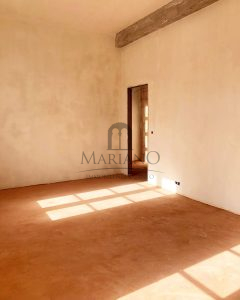
Historical Roots: A Roman Legacy in the Heart of Salento
The origins of cocciopesto can be traced back to antiquity. The Romans already understood the potential of lime-based mixtures containing crushed ceramic material, using them to create durable and water-resistant surfaces for aqueducts, cisterns, baths and floors.
In Salento, this tradition evolved through the use of local materials and construction techniques. Slaked lime, tufina — a by-product of the processing of the region’s characteristic limestone tuff — and fragments of crushed brick and terracotta became part of distinctive local formulations.
For centuries, cocciopesto was an integral part of Salento’s vernacular architecture, from fortified farmhouses and rural estates to historic residences and the elegant palaces of Lecce. It was particularly valued for continuous floors and wall finishes.

The Technique: From Traditional Craftsmanship to Contemporary Applications
The beauty of cocciopesto lies in its handcrafted character. Its preparation and application require experience, sensitivity and precision — qualities that remain just as relevant today as they were in the past.
Terracotta fragments + lime + tufina or sand = cocciopesto
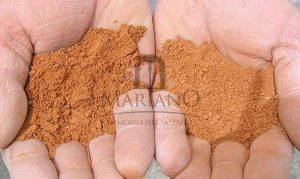
The Traditional Technique
Traditionally, the material was applied in successive layers, generally beginning with coarser aggregates and gradually moving towards finer finishes.
The surface was then compacted and repeatedly beaten by hand, helping consolidate the mixture and define its final appearance. Depending on the technique and intended use, the finishing process could include surface treatments based on natural soaps, waxes or oils.
The result was a continuous, durable surface with a strong sense of material authenticity.
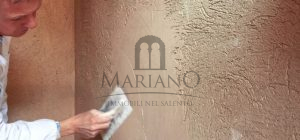
The Contemporary Approach
Today, the traditional language of cocciopesto is being adapted to the requirements of contemporary architecture. Production and application processes can be more precisely controlled, allowing designers to achieve different aggregate sizes, textures and finishes.
Controlled aggregate sizes. Ceramic fragments can be selected and calibrated to create more uniform, minimalist surfaces suitable for both residential and commercial interiors.
Advanced formulations. In contemporary systems, the traditional base may be combined with specific additives or compatible binders to meet the performance requirements of a particular project, depending on its intended use and the manufacturer’s specifications.
Compatibility with underfloor heating. When correctly designed and installed as part of a compatible system, cocciopesto can also be used in interiors equipped with radiant floor heating, contributing to the creation of continuous and tactile surfaces.
Aesthetic Beauty: Material, Light and Colour
It is, however, on an aesthetic level that cocciopesto reveals one of its most distinctive qualities.
Unlike many industrial surfaces, its identity emerges from the interaction between material, craftsmanship and light. Each application can display subtle variations in colour and texture, making every surface unique.
Natural Tones
The colour of cocciopesto derives primarily from the characteristics of its constituent materials and the terracotta fragments within the mixture. Deep reds, soft pinks, ochres, straw yellows and earthy burnt tones can coexist within the same surface, creating a warm and unmistakably Mediterranean palette.
Vibrant Surfaces
The handcrafted process helps avoid the perfectly uniform, repetitive appearance associated with many industrial materials. The surface responds to both natural and artificial light, producing changing variations in tone, depth and chiaroscuro throughout the day.
Visual Continuity
One of cocciopesto’s key qualities is its ability to create continuous surfaces without the joints associated with conventional ceramic flooring.
The result is a fluid architectural language in which floors and walls can be connected through a common material, creating spaces that feel minimalist, warm and contemporary.
Why Cocciopesto Belongs to the Future of Sustainable Architecture
The renewed interest in cocciopesto is not based solely on aesthetics. Its rediscovery is part of a broader movement within contemporary architecture towards natural, durable materials and more conscious design strategies.
Breathability
Lime-based finishes can facilitate the diffusion of water vapour through surfaces, helping to manage indoor humidity when incorporated into appropriately designed building systems.
Materiality and Well-Being
Traditional formulations based on lime and mineral and ceramic aggregates can provide an alternative to synthetic materials in a variety of applications. The specific formulation and finishing treatments, however, remain essential factors in determining the actual performance of the system.
Circular Economy
The use of ceramic fragments and, in certain formulations, materials recovered from manufacturing processes can contribute to circular-economy principles by giving value to secondary raw materials and reducing the demand for virgin resources.
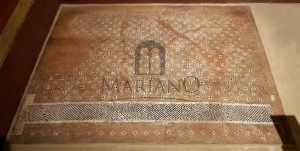
Tradition and Innovation: The Same Material, A New Language
Salento cocciopesto demonstrates that looking to the past does not necessarily mean embracing nostalgia.
On the contrary, it means rediscovering techniques, materials and knowledge capable of responding to contemporary needs.
Within contemporary architecture, cocciopesto becomes more than a simple finish: it is a way of bringing materiality back to the centre of the design process.
Earth, lime, terracotta and craftsmanship come together to create a surface that carries the memory of its territory while naturally adapting to contemporary spaces.
Choosing cocciopesto today means bringing together the strength of the earth, the wisdom of history and the elegance of a living surface.