



The Secret Architecture of the Sea: White Coral, Its Legend, and the Leukos Museum
In the Deep Heart of the Ionian Sea: The Mystery of White Coral
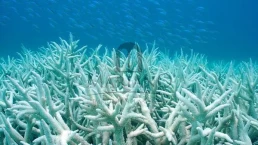
Where the waters of the Adriatic and Ionian Seas embrace, in the silent blue depths off Santa Maria di Leuca, lies a world known to few: a secret realm of white corals, submerged canyons, and petrified forests. Here, hundreds of meters below sea level, there is no sunlight and no human sound—only the slow dance of life patiently building its most fragile and perfect architectures.
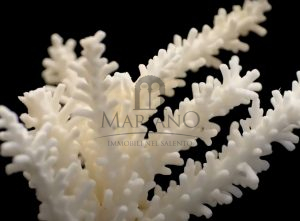
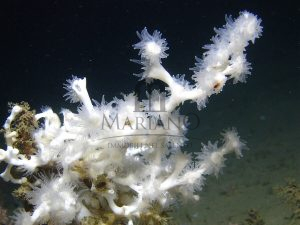
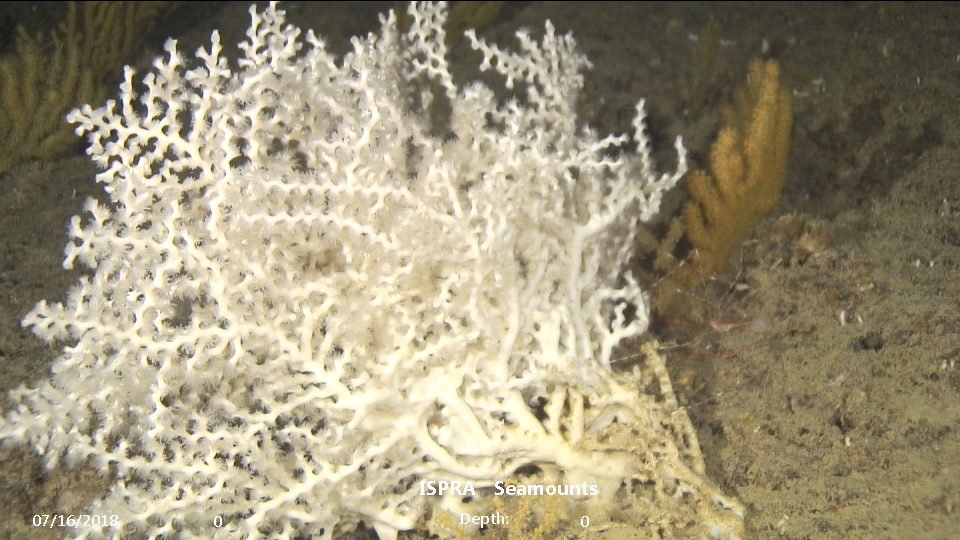
What lies hidden in the cracks of the seabed is one of the most astonishing ecosystems in the Mediterranean: white coral bioconstructions (Lophelia pertusa, Madrepora oculata), branching calcareous formations resembling tiny fossil trees that grow in the deepest darkness. Unlike tropical corals, these thrive in cold, still waters between 400 and 1,100 meters deep, feeding on plankton carried by bottom currents.
 A Recent Discovery, an Ancient Legacy
Their presence off the coast of Leuca was only confirmed in the 21st century thanks to exploratory missions led by CoNISMa through the APLABES project, which used advanced sonar and underwater robots. Yet local fishermen had long suspected something: for generations, they avoided certain areas of the deep sea where nets would snag in “an invisible forest.” They called it "the stone forest," believing that ancient spirits or sacred marine creatures lived there.
The images returned by ROVs (Remote Operated Vehicles) revealed an extraordinary landscape: three-dimensional structures up to 2 meters tall, resembling natural cathedrals that provide shelter for rare fish, blind crustaceans, and branching sponges. A delicate balance now threatened by activities such as bottom trawling, ocean acidification, and global warming.
Coral in Salentine Mythology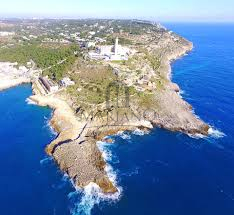
As often happens with what humans cannot see, legends flourish around white coral. One of the most evocative tells of corals as the solidified tears of a mermaid who fell in love with a fisherman and was punished by the gods. Off Punta Meliso, on calm days, some say you can still hear her song.
Another story, whispered through the alleys of the old town, speaks of a submerged alabaster city swallowed by a divine storm, its domes and towers now covered in white coral—not ruins, but living witnesses of a forgotten world.
 Leukos White Coral Museum: Where the Sea Becomes Knowledge
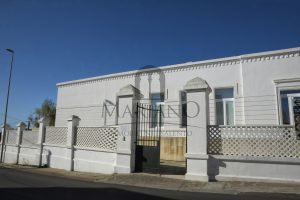
For those who cannot descend into the abyss but want to experience its wonder, there is a place that evokes it with power and precision: the Civic Museum of White Coral Leukos, just steps from the promontory where Leuca’s lighthouse stands.
Born from the passion of a local collector and developed with the help of biologists and science communicators, the museum is the only one in Italy entirely dedicated to white coral. It's not just a collection of specimens—it's a narrative, sensory, and scientific experience that guides visitors through rare exhibits, microscopes, stories, multimedia panels, and visual enchantments.
Guided Tours: A Journey Through Science, Wonder, and Storytelling
Each guided tour is a short journey led by marine biology experts and passionate educators. The path, accessible to all ages, weaves together scientific knowledge with historical anecdotes, biological curiosities, and local legends. Visitors discover how coral colonies form, what "deep bioconstruction" means, and which species rely on them for survival.
Interactive labs are available for children, while adult visitors will find insights on current topics such as climate change, microplastics, and marine conservation.
A Room, A Story
The museum unfolds across themed spaces: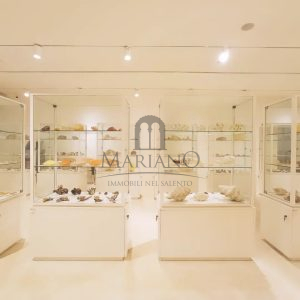
-
The White Coral Hall, the core of the exhibit, with real specimens from the Ionian Sea
-
The Shell Gallery, featuring surprising shapes and colors from around the world
-
A section on sponges, madrepores, and marine fossils
-
Artifacts collected during scientific expeditions, in collaboration with universities and marine institutes
Why Visit the Leukos Museum
-
It is the only one of its kind in Italy
-
It stems from authentic scientific and cultural passion
-
It offers an accessible and engaging experience for families, schools, and travelers
-
It connects myth, nature, and science in one cohesive journey
-
It is set in one of the most fascinating landscapes of Salento
 An Extension of the Sea onto the Land
Visiting Leukos means diving without getting wet, sensing the salt in the air and the sounds of the deep, being carried away by a story that began millions of years ago and continues today through environmental awareness and wonder.
It’s not just a museum—it’s a bridge between worlds.
An Invitation to Discover the Invisible
The white coral of Leuca is a hidden treasure few know about. The Leukos Museum brings it to the surface to reveal its beauty and fragility. It’s an invitation to see the sea with new eyes—more conscious, more curious, more human.


Another Salento: The Ionian Salento Cycle Path, Between Nature and Sustainability
 Salento is not just mass tourism, crowded beaches and summer nightlife. There is another Salento, authentic and sustainable, which invites you to a slow and conscious travel experience. This is the message that Vivilitalia, a company specialized in environmental tourism, wants to convey through the Green Community Ionico-Adriatica project and the creation of the Salento Ionico cycle path.
A Sustainability Project: The Green Community Ionico-Adriatica
 The Green Community Ionico-Adriatica project promotes sustainable development in the Ionian-Adriatic area, aiming to integrate environmental protection with economic and social growth. The initiative has the following main objectives:
Spread practices of circular and sustainable economy.
Implement projects for the production of green energy.
Requalify degraded areas.
Promote cycle tourism as a sustainable alternative to traditional tourism.
Among the concrete results, the creation of the Salento Ionico cycle path stands out: a cycle-tourist route of about 305 kilometers, divided into five rings that can be traveled in a day, which passes through farms, wild beaches and historic villages. A dedicated app has also been developed to support travelers, which facilitates navigation along the cycle path, indicating paths, points of interest and bike-friendly facilities.
The Salento Ionico Cycle Path: A Route Between the Sea and Villages

The route winds mainly on secondary roads with low traffic intensity and is divided into five main rings:
- Ugento-Racale: It crosses wetlands of great naturalistic value and coastal areas such as Capilungo and Punta della Suina, famous for their pristine beauty.
- Gallipoli-Racale: An itinerary that touches suggestive places such as the Punta Pizzo Regional Park and the Island of Sant’Andrea.
- Nardò-Gallipoli: Here you will find the villas of Santa Maria al Bagno and the breathtaking panorama of Porto Selvaggio, with its crystalline sea and wild nature.
- Porto Cesareo-Nardò: Between medieval coastal towers and coastlines of rare beauty.
- Manduria-Torre Lapillo: A journey through history and tradition, up to the land of Primitivo, the symbolic wine of the area.
A Journey through Nature, Culture and Identity
 The complete route starts from Lecce, a city with baroque charm, and passes through some of the most beautiful villages in Salento.
 Among these, Galatina, famous for the Basilica of Santa Caterina d’Alessandria, and Ugento, with its unique ecosystems. From Nardò, the journey continues towards the Taranto side, passing through Torre Lapillo and Torre Colimena, where you can admire the medieval coastal towers. Finally, we reach Manduria, land of the famous Primitivo wine.
Roberto Guido, creator of the route, describes it as “an extraordinary travel experience in Salento that brings together the treasures of the hinterland with the sea, but above all with nature, going beyond the clichés of seaside tourism”.
A Community Network for Sustainable Tourism
The project was made possible thanks to the collaboration between municipal administrations, associations and local economic operators, coordinated under the Memorandum of Understanding of the Ionian-Adriatic Green Community. Among the participating municipalities: Alliste, Avetrana, Galatone, Gallipoli, Manduria, Nardò, Porto Cesareo, Racale, Taviano and Ugento.
“The Salento Ionian cycle path is the icing on the cake of the Green Community”, says the mayor of Nardò, Pippi Mellone. “For years we have been working on a slow tourism offer, which focuses on the experiential and identity factor”.
 Alternative Tourism on the Rise
According to Sebastiano Venneri, president of Vivilitalia, “cycle tourism is a rapidly growing market, with a turnover of 5.5 billion euros in the last year”. The Salento Ionico cycle route represents a further opportunity for the area to deseasonalise the tourist offer, offering accessible and immersive routes even in spring and autumn, when temperatures are ideal for cycling.
Discovering Salento by Bike
From today, exploring Salento means choosing slow, sustainable and environmentally friendly tourism, fully experiencing the area with all your senses. A bike trip through farms, parks, villages and breathtaking coasts, rediscovering the authentic soul of a Salento that goes beyond mass tourism.
The Salento Ionico cycle route is a unique opportunity for those who want a true and profound experience, cycling through history, culture and uncontaminated nature.

The Marine Protected Areas of Salento and Their Relationship with Architecture and Construction: A Fragile Balance Between Conservation and Development
The Salento: Enchanting Coasts and the Challenge of Sustainability
The Salento, with its enchanting coasts washed by the Ionian and Adriatic Seas, has always been a territory that fascinates with its natural beauty and historical heritage. In this corner of Puglia, the Marine Protected Areas (MPAs) play a fundamental role in safeguarding marine and coastal ecosystems, while at the same time posing delicate challenges for architecture and construction, which must balance environmental protection with the growing demand for sustainable development. This article explores how the Salento’s MPAs interact with urban planning and architecture, focusing on possible solutions to preserve the integrity of the territory without compromising the region's economic and tourism dynamism.
What is a Marine Protected Area?
A Marine Protected Area (MPA) is a specific area of the sea and its coasts that is subject to special protection measures to safeguard natural habitats, marine biodiversity, and endangered species. MPAs are managed through specific regulations, which may include restrictions on human activities such as fishing, navigation, and construction, with the goal of reducing human impact on the marine and coastal environment. In Italy, the MPA system is an essential tool for protecting the natural marine heritage, and Salento is home to some of the most significant marine areas in the Mediterranean, attracting millions of visitors every year.
Marine Protected Areas of the Salento
The Salento, with its rich biodiversity and breathtaking landscapes, is dotted with MPAs that, besides being places of exceptional ecological value, play a central role in the region's tourism landscape.
 Marine Protected Area of Porto Selvaggio
This MPA is one of the most significant examples of the beauty and ecological importance of the Salento. Located in the Nardò area, just a few steps from the natural park of Porto Selvaggio, this area protects a stretch of coast rich in Mediterranean scrub, sea caves, and crystal-clear waters. The area hosts a wide variety of marine species, including fish, mollusks, and occasionally dolphins.
The architecture developed around Porto Selvaggio is highly respectful of the environment. Modern buildings harmonize with the landscape, using natural materials such as Lecce stone and favoring architectural solutions that minimize visual and environmental impact. The buildings are designed to blend into the surrounding landscape, leveraging natural light and energy efficiency to reduce the use of non-renewable resources.
Marine Protected Area of Santa Maria di Leuca – Capo di Leuca
Santa Maria di Leuca, located at the southernmost tip of the Salento peninsula, represents another area of great interest among the region’s MPAs. Here, the sea meets history, traditions, and local culture. The protected area includes a wide range of marine habitats, from cliffs to Posidonia oceanica meadows, which are essential for biodiversity conservation.
Urban planning regulations in Santa Maria di Leuca are particularly stringent and greatly limit new constructions along the coast. This ensures that building development is responsibly directed, avoiding the construction of invasive structures that spoil the panoramic view. In this sense, the concept of "landscape architecture" is fundamental to urban planning, focusing on the restoration of old rural structures and promoting tourism that respects the environment.
 Marine Protected Area of Torre Guaceto
Located between Brindisi and Ostuni, Torre Guaceto is one of Puglia’s most important nature reserves. Characterized by salt marshes, sandy dunes, and crystal-clear waters, this area serves as a refuge for numerous species of migratory birds and marine fauna. The presence of extensive Posidonia meadows, among the largest in the Mediterranean, is crucial for coastal protection and marine biodiversity conservation.
In Torre Guaceto, land management focuses on enhancing local traditions and restoring rural architecture. The buildings, mostly restored from old farms and trulli, are integrated into the surrounding landscape, with particular attention to the use of eco-compatible materials and building techniques that minimize environmental impact. Restoring historic buildings helps maintain the connection with local tradition, while environmental respect promotes sustainability.
1. Rauccio Regional Natural Park
The Rauccio Natural Park, located in the Salento hinterland, is an area of particular ecological importance. Although it is not a marine area, the park protects numerous natural habitats, such as wetlands and Mediterranean scrubland. The park's management focuses on protecting native fauna and flora, but the surrounding areas are also subject to building restrictions to ensure that urban development does not compromise the integrity of the ecosystem.
2. WWF Le Cesine Oasis
Le Cesine is one of the most evocative natural oases in Salento, a wetland that is home to a rich variety of wildlife. The oasis is particularly important for the protection of migratory birds and endangered species. The area has been preserved from invasive building development, and the territorial planning of the surrounding areas includes the protection of the natural landscape and the promotion of eco-sustainable tourism.
3. Ugento Coastal Park
The Ugento Coastal Park is a nature reserve that extends along the Ionian coast of Salento and includes an important maritime and coastal area. Characterized by sand dunes, pine forests and cliffs, this park is essential for the conservation of natural habitats and for the protection of marine and terrestrial species. Here too, urban planning regulations aim to limit construction, encouraging redevelopment of existing structures and sustainable tourism development.
4. Punta Pizzo Park
Punta Pizzo is a protected area overlooking the Ionian Sea, known for its natural beauty and crystal clear waters. The area is ideal for the protection of dunes and Posidonia meadows, and is a popular destination for ecotourism activities such as birdwatching. The park was established to preserve the integrity of the marine and coastal environment, limiting the construction of new buildings and encouraging the adoption of architectural solutions that are in harmony with the surrounding natural environment.
 5. Palude del Capitano Park
The Palude del Capitano is a wetland of ecological importance, which represents a precious habitat for many species of migratory birds and for the typical vegetation of the Salento marshes. In this area, urbanization is strictly controlled to protect the ecosystem and prevent irreversible damage to natural resources. The park, although not a marine area, is fundamental for the management of water resources and the conservation of the landscape.
Other Parks and Natural Areas of the Salento
Besides the aforementioned MPAs, Salento boasts other protected areas that are crucial for preserving local biodiversity and maintaining unspoiled coastal landscapes. These parks, although not necessarily marine protected areas, also contribute to environmental protection and impose building restrictions to prevent damage to the natural ecosystem.
Architecture and Construction in the Context of Marine Protected Areas
The MPAs of Salento place a strong emphasis on sustainability and responsible management of natural resources. However, the relationship between MPAs and architecture is not without tension, as building expansion and the growing demand for tourist facilities put pressure on environmental protection regulations. To balance the need for development with nature conservation, it is essential to adopt a sustainable building model that respects the specific characteristics of the coastal landscape.
Sustainable Tourism and New Architectural Solutions
Sustainable tourism is one of the main tools to ensure the protection of MPAs. Tourist facilities must harmoniously integrate with the environment, avoiding the construction of invasive buildings that could alter the landscape. In this regard, eco-compatible architecture plays a key role. Buildings near MPAs must meet low environmental impact criteria, such as using natural materials and renewable energy sources.
A significant example is the emergence of eco-resorts in Salento, designed to be energy self-sufficient and to minimize the use of natural resources. These structures not only offer a tourist experience respectful of the environment but also a development model that can be replicated in other marine protected areas.
Requalification and Recovery of Existing Buildings
Requalifying existing buildings, rather than constructing new ones, is one of the most effective solutions to reduce environmental impact. In many Salento MPAs, the restoration of historic buildings, such as trulli, masserie, and abandoned houses, has been encouraged as part of a heritage enhancement program. This approach not only preserves the historical memory of the area but also allows for new tourist facilities in already developed contexts, avoiding building speculation on untouched land.
Conclusions
The marine protected areas of Salento are a valuable heritage that deserves to be preserved for future generations. The relationship between environmental protection and building development is complex but can be managed with innovative and sustainable solutions that promote a balance between conservation and progress. MPAs, along with other parks and nature reserves in the region, offer a unique opportunity to develop tourism that respects the environment while promoting economic growth and enhancing natural resources.

Golden Fruits and White Stone: Citrus Fruits in the Aesthetics and History of Salento
A Divine Gift: The Greek Myth of Citrus Fruits
 According to Greek mythology, when Juno married Jupiter, she gave him as a dowry some trees that produced splendid golden fruits, oranges
 and lemons, eternal symbols of love and fertility. This symbolic meaning continues to this day, as demonstrated by the tradition of using orange blossoms in wedding bouquets.
Jupiter considered those gifts so precious that he jealously guarded them in a magnificent garden, located in a remote region of the known world at the time, at the foot of Mount Atlas. To protect these legendary plants, he commissioned the Hesperides, young girls with melodious singing, assisted in their mission by the dragon Ladon.
Despite these precautions, Jupiter was unable to prevent their theft. During his eleventh labor, Hercules managed to take possession of the trees after a grueling fight that saw Ladon succumb. From that moment on, citrus fruits became accessible to humans, while maintaining their connection with divinity through the Greek term hesperidium, used in botany to indicate the citrus fruit.
 From Asia to the Mediterranean: the long journey of citrus fruits
The cultivation of citrus fruits began in their region of origin, eastern Asia, around 2400 BC. Their journey to the Mediterranean was slow and progressive, passing through India and the Middle East. However, it seems that the Romans only knew the citron and the lemon, as evidenced by frescoes and mosaics of the time. It was only around the 7th century that the Arabs introduced the bitter orange, also known as melangolo, to Sicily.
Although many authoritative sources attribute the introduction of the sweet orange to the Arabs, there is no historical or literary evidence to support this thesis. Consequently, several scholars believe that the Portuguese were responsible for its spread, coinciding with the beginning of their colonial expansion in 1415. Evidence to support this hypothesis can be found in the diary of Vasco de Gama’s first oriental mission, in which he describes his encounter with sweet oranges: “sonvi melancie assai, ma tutte dolci…”. It is likely that the Portuguese discovered these fruits in the East and introduced them to Europe. Further confirmation is the fact that the sweet orange was called Portogallo, a name that persists in several southern dialects, such as those of Calabria and Salento (portagallu).
Citrus fruits in Salento: diffusion and importance
Citrus fruits, such as oranges, lemons and cedars, are not native to Salento. They were introduced into the Mediterranean area thanks to trade with the East, probably by the Phoenicians and later by the Arabs. During the Middle Ages and the Renaissance, these crops spread in Salento, thanks to the mild climate and fertile soil that favor their luxuriant growth.
Citrus gardens became an integral part of the local agricultural culture, and even today it is possible to find orange and lemon groves that adorn the Salento countryside, especially in the more humid and wind-sheltered areas.
The symbolism of citrus fruits: between religion and legends
Over the centuries, citrus fruits have acquired an important role not only from an economic point of view, but also from a symbolic one.
In ancient times, and especially in the Medieval period, the orange is a symbol of love: to give, receive, exchange. In the Christian context, together with the citron and the lemon, the orange symbolized the Holy Trinity: the three citrus fruits, distinct in shape, are unique in substance. Lemons and oranges were planted in the garden of the house as well as in the porticoes of churches, symbolizing the ancestors and the souls in mortal bodies. According to a widespread legend, which is linked to the passage of Saint Francis in Salento, also in Lecce, in the oratory next to the Franciscan church and convent, the seraphic father planted an orange tree. It also happened that one day Saint Francis, unable to feed his companions, asked for charity from a devotee who, deeply mortified at having nothing to offer him, closed the door. Unperturbed, Saint Francis knocked a second time, but received the same answer. He tried a third time and the man, uncomfortable at not being able to please the beggar, told him that he did not have even a crumb of bread in the house. In fact, that very year, even the only orange tree he had in the garden had not borne fruit. Saint Francis asked to be accompanied near that tree and the astonishment of the owner of the house was immense when he saw that the sterile plant had grown luxuriantly and had a large load of wonderful fruit.
 Citrus fruits and art in Baroque Salento
During the Baroque period, Salento experienced a period of great artistic and cultural ferment, and citrus fruits were considered symbols of purity, abundance and prosperity. They were often exchanged as precious gifts or used in events religious and ceremonies.
Citrus fruits were also used in the medical and cosmetic fields, thanks to their beneficial properties. Local traders exported these fruits to other territories, helping to consolidate the image of Salento as a land rich in natural resources.
Citrus culture is also visible in the art and architecture of Salento. During the Baroque period, local artists and architects began to use decorations inspired by citrus fruits in their works. Facades of churches and palaces, frescoes and sculptural details often include motifs that recall the golden fruits, a symbol of divine light and perfection.
A significant example is the Church of Santa Croce in Lecce, a masterpiece of Lecce Baroque. The intricate decorations of the facade include floral and natural motifs that recall the fertility of the Salento land, among which details that could be inspired by citrus fruits stand out.
Even in the historic gardens of noble villas, citrus fruits play an aesthetic and symbolic role. The “fenced citrus groves”, called “secret gardens”, were protected spaces where aristocrats grew citrus fruits not only for their nutritional value, but also for aesthetic and olfactory pleasure.
Citrus fruits and popular magic: macàre and spells
Even today in Salento you can hear about macàre and macarìe, and especially in the area of Grecìa salentina, from Soleto to Sternatia to Zollino. Stories, sagas, songs, nursery rhymes: there is a vast literature on the macàre (or “daughters of the night” as Petronius poetically called them), which speaks of witches and their raids. Their specialization is the macarìe, spells.
The simplest and most widespread is the one to find lost love, and the main protagonist is precisely an orange. It was necessary to obtain a lock of hair from the beloved and an orange (symbol of the world). Using the wax from a lit candle, a hole had to be made in the center of the fruit and the lock of hair inserted. At this point, the orange had to be wrapped in string and, after tying a tight knot, hung on a wooden stick. Finally, needles or pins had to be stuck into the peel, pronouncing the appropriate spells and ritual magic formulas at each puncture. After that, the orange had to be kept under the mattress: it would become a powerful talisman, capable of making the beloved return in a short time, tying him or her to the person who had performed the rite... just like the string tied around the orange.
 The game of "puni": when oranges became a pastime
A hole in the center, five more around it. You would stand 4-5 meters away and throw a “rizza” orange (bitter, the bitter orange). If the orange stopped in one of the side holes, you won your stake; instead, whoever managed to get it into the central one took the entire prize pool.
This is the very ancient game of “puni”, whose name, in the linguistic islands of the old people of Terra d’Otranto, means “hole” or “pit”.
In Montesardo, in the Lecce area, puni was played until a few years ago, until the old players died. The games were played on spring and summer afternoons, on beautiful days, and the improvised playing field was located in the shade of the Chapel of the Immaculate Madonna. Players from all the nearby towns participated.
Today, in nearby Corsano, the “Idee a Sud-Est” Association has been organizing the Puni Championship for nine years, which this year was also opened to women. An ancient game, recovered and destined to be passed down to new generations.
Citrus fruits today: a legacy still alive
Today, the bond between Salento and citrus fruits continues to be strong. Many local farms have rediscovered ancient varieties of citrus fruits, growing them with organic and sustainable methods. Products such as jams, liqueurs (such as limoncello) and essential oils are exported all over the world, bringing a piece of Salento to international tables. In Salento, the mild climate makes this land ideal for growing citrus fruits. These trees are among the most common in urban gardens and rural areas, but it is especially in Alezio and the Gallipoli hinterland that their cultivation has reached a high level of specialization. Here, different varieties of sweet orange are grown with staggered ripening, in order to satisfy the provincial needs for a long period of the year. In addition to the most common varieties, such as the Arancio Biondo Comune, the Sanguinello and the Tarocco, there are lesser-known cultivars and numerous varieties of mandarins, lemons and rare citrus fruits.
Conclusion: a link between nature, history and culture
Salento and citrus fruits share a rich and fascinating history, which unites nature, tradition and art. This link is not only a testimony of the past, but also a source of inspiration for the present and the future. Strolling among the citrus groves of Salento or admiring the artistic details that celebrate these fruits is a way to discover the deep soul of this unique and generous land

Smart Working, Workation and Slow Life: Salento as a New Home
In recent years, Salento has established itself not only as one of the most sought-after holiday destinations, but also as an ideal destination for those seeking a change of life. Post- pandemic housing trends, together with the growing popularity of remote working, have redefined the needs of those looking for a home, making Salento a perfect place to live. In this article, we explore how this region responds to the new demands of the real estate market, with a focus on spaces for smart working, a return to nature, and luxury housing solutions.
Remote working: the ideal home in Salento
With the development of smart working, many professionals are choosing to move to places that combine high quality of life and excellent digital connections. Salento, with its natural beauty, a mild climate and a competitive cost of living, is confirmed as one of the most interesting choices.
 Ideal characteristics of homes for remote working in Salento:
- Spaces dedicated to the home office: Villas in Nardò or Galatina offer large, bright studios overlooking centuries-old olive groves, creating an environment that stimulates productivity and concentration.
High-speed internet connections: Many places such as Lecce and Gallipoli are investing in digital infrastructure. Even villages such as Specchia and Presicce have equipped themselves with fiber optics, making online work possible even in more remote areas.
Relaxing settings: Villas in Porto Cesareo or Santa Caterina, equipped with panoramic terraces and gardens, allow you to balance working hours with moments of relaxation, perhaps with a breathtaking view of the sea.
The return to greenery: living in the villages and countryside of Salento
The pandemic has rekindled the desire to live in open spaces and immersed in nature, leading to a rebirth of the villages and countryside of Salento.
What buyers are looking for in this area:
- Private gardens and vegetable gardens: Renovated farmhouses near Otranto offer hectares of land where you can grow an organic vegetable garden, for a sustainable lifestyle.
Traditional architecture and modern comforts: In Santa Maria di Leuca, you can find renovated trulli and pajare, often equipped with infinity pools and photovoltaic systems.
Authentic communities: Living in villages like Borgagne or Specchia means rediscovering the value of authentic relationships and a slower lifestyle. These places offer affordable properties, often with large outdoor spaces and panoramic terraces.
 Urban luxury: condos with exclusive amenities in Lecce
For those who prefer city life without sacrificing comfort, Lecce represents a new frontier of urban luxury. Known for its baroque architecture, the city is seeing an increase in high-end residential projects.
What the new luxury complexes in Lecce offer:
- Exclusive amenities: Residential complexes in the Mazzini neighborhood include spas, private gyms, condominium pools and roof gardens with city views.
Sustainability: Buildings constructed with eco-friendly materials and equipped with advanced energy-saving technologies, such as solar panels and water recovery systems.
Strategic locations: Penthouses in the historic center of Lecce combine modern design with breathtaking views of the baroque churches, offering the possibility of living near theaters, international schools and starred restaurants.
Workation and Southworking: new opportunities to live and work in Salento
The spread of remote working has made possible a new lifestyle called "workation", a combination of work and vacation. Salento is one of the most popular destinations for this experience, thanks to its ability to combine stimulating environments and relaxation.
An example is the startup Holiwork, founded in Lecce by Chiara Oliva and Georg Sauter. Holiwork offers a unique experience that combines luxury accommodation, nature, culture and gastronomy for those who want to work remotely in Salento. It is a new vision of the territory, no longer just as a tourist destination, but also as a place for professional growth and personal well-being.
Conclusions: Salento as a place of future living
Whether it is living in a masseria surrounded by greenery, working remotely with a sea view or choosing a luxury penthouse in Lecce, Salento offers housing solutions that meet the needs of the new living. This territory is the emblem of an authentic, sustainable and well-being-oriented lifestyle.
If you are looking for your ideal home, rely on real estate professionals to explore the opportunities that Salento has to offer. The future of modern living is here, between the beauty of nature and the innovation of new technologies. Don't miss the opportunity to turn your dream into reality.

The Stones Tell: The Dry Stone Walls of Salento, History and Resilience in the Landscape
Dry stone walls, characteristic of the Salento landscape, represent a tradition that has its roots in ancient times. These structures, built without the use of mortar, are an extraordinary example of rural architecture, a symbol of a past rich in history and culture. In this article we will explore the origins, evolution and current use of dry stone walls in Salento.
The first evidence of dry stone walls in Salento dates back to pre-Roman times, and the walls of this period have a structure of square blocks placed horizontally.

The local populations, the Messapians, began to use them to protect their crops from grazing, to mark the border between one property and another, as a small enclosure for animals (ncurtaturi), or they built them along the coast to protect crops from atmospheric agents.
The construction techniques were handed down from generation to generation, improving and adapting over time, and a real "craft" was born, handed down from father to son, the so-called "paritaru" ("parite" in Salento dialect means wall).
Currently the most significant evidence of these ancient walls is found in northern Salento, in the "Archaeological Park of the Messapian Walls", which extends for 150,000 m² to the north-east of the municipality of Manduria. Inside, large sections of the triple circle of walls that surrounded the city in the Messapian era are preserved.

During the Roman period, the practice of building dry stone walls became more widespread. Following the example of the civilizations that preceded them, the Romans adopted more than one dry stone construction technique (opus, in Latin), but the most widespread in Salento is the polygonal work (opus siliceum). The construction technique involves the composition of a rock bank arranged in two parallel rows of large stones, then two more rows of smaller stones converging upwards are added and the empty spaces are filled with other thinner material. The rows are then tied together with other larger stone slabs, this time inserted edgewise. In this case too, the spaces are filled with material. To finish everything off, the remaining cracks in the facades are closed by inserting stone chips. The Romans, expert engineers, recognized the effectiveness of these structures in containing the land and in delimiting agricultural areas.
In the Middle Ages, dry stone walls continued to be used mainly for the creation of terraces on hilly terrain, to prevent soil erosion and facilitate cultivation, and also to build rainwater channeling systems, improving the irrigation of fields. These structures were also very useful in animal breeding, and the projecting walls, in addition to enclosing their courtyards, were insurmountable by wolves, foxes and cattle herders, as well as ensuring the possibility of saving on labor for the care of animals, raising them in a semi-wild state.
During the Renaissance, a period of great expansion and innovation in many sectors, agriculture also underwent significant changes. This era, characterized by the rediscovery of antiquity and a growing interest in science and technology, profoundly influenced the way in which agricultural landscapes were managed and structured. In Salento, dry stone walls became even more widespread and vital to the agricultural economy, responding to new production and environmental needs. With the expansion of agriculture and the increase in production needs, these structures proved essential not only for the delimitation of land and the control of soil erosion, but also for harmonious integration into the rural landscape.

The twentieth century saw a partial abandonment of dry stone walls, due to the mechanization of agriculture and increasing urbanization. With the introduction of modern agricultural machinery, the way in which the land was cultivated changed radically, as heavy machinery required large and obstacle-free spaces to function effectively, and therefore many dry stone walls were knocked down or destroyed. This change also led to a loss of traditional cultivation techniques and the knowledge associated with the construction and maintenance of dry stone walls.
The increasing urban development and the expansion of residential and industrial areas also significantly affected the landscape of Salento, because with urban expansion rural areas were often converted into urban or residential areas, leading to the demolition of dry stone walls to make room for new buildings. Furthermore, many dry stone walls remained abandoned and in a state of decay, as rural communities moved to cities and peri-urban areas.
In the last decades of the twentieth century there was a change of trend, and there was a growing recognition of the cultural and landscape importance of dry stone walls. Historians, archaeologists and environmentalists began to highlight their historical and cultural value as an integral part of the rural heritage of Salento. Furthermore, people began to understand how much dry stone walls contribute to the beauty and uniqueness of the Salento landscape, offering a distinctive element that enriches the view and understanding of the territory.
All this has led, nowadays, to a renewed interest in their conservation, with significant consequences. Today, in fact, the dry stone walls of Salento are recognized as a cultural heritage of great value. In 2018, the art of dry stone walls was inscribed on the UNESCO list of intangible cultural heritage, a recognition that has given new life to conservation and restoration efforts. Traditional techniques are now taught to new generations, ensuring the continuity of this ancient art.
Furthermore, dry stone walls are increasingly appreciated for their positive environmental impact. In addition to preventing soil erosion, they promote biodiversity, offering refuge to numerous species of flora and fauna, a true "ecological corridor" that allows the transmission of a microfauna rich in insects, reptiles and amphibians that operate spontaneously, in synergy with human agriculture, to maintain a healthy and parasite-free environment. The interstices become their home and hiding place. The dry stone walls, with the spontaneous vegetation that grows between the stones or close to the walls themselves, constitute an important ecosystem. In their correspondence a particular microclimate is created, favorable to Mediterranean plants that can thus, thanks to the greater availability of water, overcome the summer crisis.

In particular, with regard to this last aspect, the project “L’Orto dei Tu’rat" – Storia di un’acqua spremuta dalla pietra” is worthy of note, part of the cultural/agricultural/ecological park in Ugento (Lecce). “L’Orto dei Tu’rat currently extends over an area of 16,000 m2, and is a type of barrier/drainage of very ancient origins, dating back to about 9,000 years ago and adopted in the Middle East. Since 2008, an apparently banal construction, modeled with dry stone in the shape of a crescent and arranged in such a way as to capture the humid south-west winds in its concave part, has caused the water contained in them to condense on its sloping surface. For the agricultural populations of the Mediterranean areas characterized by desert climates, with significant temperature variations from day to night, it was an effective irrigation system for the vegetation grown immediately at its feet. It is an excellent example of bioclimatic architecture, which exploits passive phenomena, avoiding the waste of non-renewable energy.
Even in the tourism sector, dry stone walls play a crucial role in preserving the authenticity and charm of the Salento landscape, acting as a magnet for visitors looking for a genuine experience. These ancient structures, which dot the territory with their rustic elegance, offer a glimpse of local tradition and culture, attracting tourists eager to explore and appreciate the pristine beauty and rich history of the region. Dry stone walls not only visually enrich the landscape, but also evoke a sense of continuity and connection with the historical roots of Salento, making each visit a journey through time and an immersion in the authentic culture of the territory.

The dry stone walls in Salento are much more than simple stone structures; they represent an authentic symbol of resilience, ingenuity and creativity of local communities. These structures, born from the expert hands of artisans who worked
with stones collected from the fields, are witnesses to a thousand-year-old tradition that has been able to adapt and thrive through centuries of historical and social transformations. From their ancient origins, when they served to delimit the land and manage natural resources, to the present day, dry stone walls have been able to maintain their function and their charm intact. Each stone, laid with care and precision, tells a story of adaptation and harmony with the environment, reflecting the ability of local populations to respond to the challenges of time without compromising their essence.
"Ogni petra azza parite" (every stone contributes to building a wall), or "Every stone has its own story", is a Salento expression that encompasses the essence and profound meaning of stone structures. This dialect phrase, steeped in popular wisdom, does not limit itself to describing a material aspect, but evokes a deeper connection between the stones and the stories they tell.
Today, as in the past, these walls continue to be much more than simple elements of the landscape: they are custodians of the historical memory and culture of Salento, uniting the past with the present and contributing significantly to the preservation of the identity and beauty of a unique territory. Their silent but powerful presence enriches the landscape, transforming it into a stage where history, culture and nature intertwine in a fascinating tale of resilience and continuity