



The Secret Architecture of the Sea: White Coral, Its Legend, and the Leukos Museum
In the Deep Heart of the Ionian Sea: The Mystery of White Coral
Where the waters of the Adriatic and Ionian Seas embrace, in the silent blue depths off Santa Maria di Leuca, lies a world known to few: a secret realm of white corals, submerged canyons, and petrified forests. Here, hundreds of meters below sea level, there is no sunlight and no human sound—only the slow dance of life patiently building its most fragile and perfect architectures.
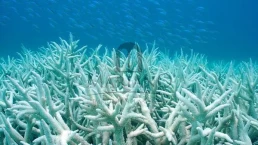
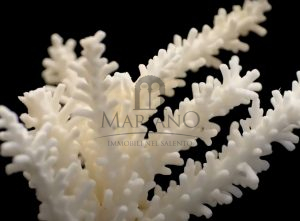
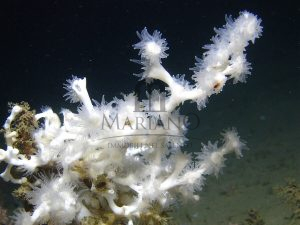
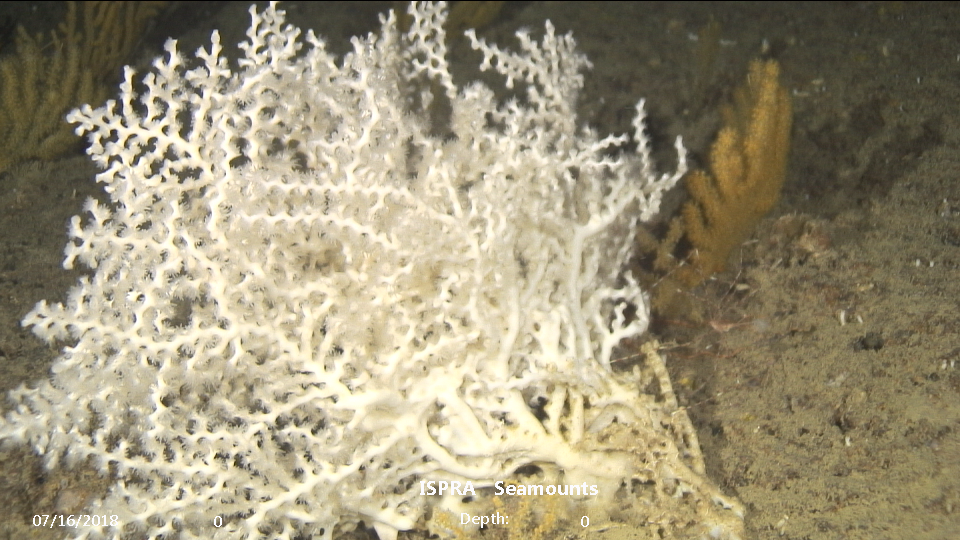
What lies hidden in the cracks of the seabed is one of the most astonishing ecosystems in the Mediterranean: white coral bioconstructions (Lophelia pertusa, Madrepora oculata), branching calcareous formations resembling tiny fossil trees that grow in the deepest darkness. Unlike tropical corals, these thrive in cold, still waters between 400 and 1,100 meters deep, feeding on plankton carried by bottom currents.
 A Recent Discovery, an Ancient Legacy
Their presence off the coast of Leuca was only confirmed in the 21st century thanks to exploratory missions led by CoNISMa through the APLABES project, which used advanced sonar and underwater robots. Yet local fishermen had long suspected something: for generations, they avoided certain areas of the deep sea where nets would snag in “an invisible forest.” They called it "the stone forest," believing that ancient spirits or sacred marine creatures lived there.
The images returned by ROVs (Remote Operated Vehicles) revealed an extraordinary landscape: three-dimensional structures up to 2 meters tall, resembling natural cathedrals that provide shelter for rare fish, blind crustaceans, and branching sponges. A delicate balance now threatened by activities such as bottom trawling, ocean acidification, and global warming.
Coral in Salentine Mythology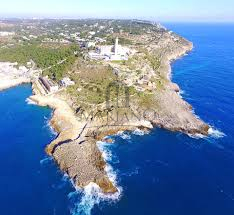
As often happens with what humans cannot see, legends flourish around white coral. One of the most evocative tells of corals as the solidified tears of a mermaid who fell in love with a fisherman and was punished by the gods. Off Punta Meliso, on calm days, some say you can still hear her song.
Another story, whispered through the alleys of the old town, speaks of a submerged alabaster city swallowed by a divine storm, its domes and towers now covered in white coral—not ruins, but living witnesses of a forgotten world.
 Leukos White Coral Museum: Where the Sea Becomes Knowledge
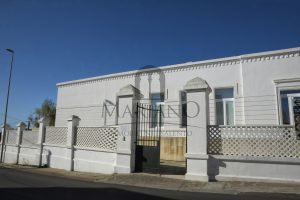
For those who cannot descend into the abyss but want to experience its wonder, there is a place that evokes it with power and precision: the Civic Museum of White Coral Leukos, just steps from the promontory where Leuca’s lighthouse stands.
Born from the passion of a local collector and developed with the help of biologists and science communicators, the museum is the only one in Italy entirely dedicated to white coral. It's not just a collection of specimens—it's a narrative, sensory, and scientific experience that guides visitors through rare exhibits, microscopes, stories, multimedia panels, and visual enchantments.
Guided Tours: A Journey Through Science, Wonder, and Storytelling
Each guided tour is a short journey led by marine biology experts and passionate educators. The path, accessible to all ages, weaves together scientific knowledge with historical anecdotes, biological curiosities, and local legends. Visitors discover how coral colonies form, what "deep bioconstruction" means, and which species rely on them for survival.
Interactive labs are available for children, while adult visitors will find insights on current topics such as climate change, microplastics, and marine conservation.
A Room, A Story
The museum unfolds across themed spaces: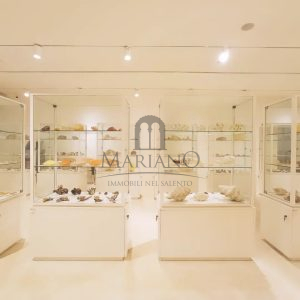
-
The White Coral Hall, the core of the exhibit, with real specimens from the Ionian Sea
-
The Shell Gallery, featuring surprising shapes and colors from around the world
-
A section on sponges, madrepores, and marine fossils
-
Artifacts collected during scientific expeditions, in collaboration with universities and marine institutes
Why Visit the Leukos Museum
-
It is the only one of its kind in Italy
-
It stems from authentic scientific and cultural passion
-
It offers an accessible and engaging experience for families, schools, and travelers
-
It connects myth, nature, and science in one cohesive journey
-
It is set in one of the most fascinating landscapes of Salento
 An Extension of the Sea onto the Land
Visiting Leukos means diving without getting wet, sensing the salt in the air and the sounds of the deep, being carried away by a story that began millions of years ago and continues today through environmental awareness and wonder.
It’s not just a museum—it’s a bridge between worlds.
An Invitation to Discover the Invisible
The white coral of Leuca is a hidden treasure few know about. The Leukos Museum brings it to the surface to reveal its beauty and fragility. It’s an invitation to see the sea with new eyes—more conscious, more curious, more human.


Puglia Dream: Salento Wins the Blue Flag 2025
Every year, with the arrival of spring, anticipation grows for the announcement of the new Blue Flags—the prestigious international award given to coastal locations that stand out for the quality of their waters, services, and environmental care. The year 2025 has been particularly positive for Puglia, which confirms and strengthens its presence on the national scene, with several Salento locations in the spotlight.
But what exactly is the Blue Flag? What’s its history? And why is it so important—not only for sea lovers, but also for local communities and the regional economy?
The Origins of the Blue Flag
The Blue Flag was established in 1987 by the FEE (Foundation for Environmental Education), an independent international organization based in Denmark. Its goal—then and now—is to promote environmental sustainability in coastal municipalities by encouraging administrations to improve land management, water cleanliness, and the quality of services offered to residents and tourists.
Over the years, the award has gained increasing importance, becoming an international benchmark for those seeking environmentally responsible seaside destinations. Today, the Blue Flag is awarded in over 50 countries worldwide and represents a symbol of reliability, safety, and respect for nature.
Criteria for Earning a Blue Flag
Earning this recognition is no easy feat. Locations must meet numerous requirements that go far beyond scenic beauty or crystal-clear waters. Key criteria include:
-
Excellent bathing water quality, verified by constant and rigorous monitoring.
-
Sustainable land management, with a focus on recycling, wastewater treatment, and protection of local ecosystems.
-
Accessibility and safety, with equipped beaches, lifeguards, and facilities accessible to people with disabilities.
-
Environmental education, promoted through activities, information boards, and awareness campaigns for both residents and visitors.
Participation in the program is voluntary, but the selection process is strict: every application is thoroughly reviewed, and only those that meet all requirements are allowed to hoist the coveted flag.
Puglia Among the Sea Queens of 2025
With its long coastline bathed by both the Adriatic and Ionian Seas, Puglia has long been one of Italy’s most awarded regions by the FEE. In 2025 as well, the region not only confirmed but increased the number of Blue Flag destinations, placing it among the top regions in Italy for certified beaches.
Twenty-two Puglian municipalities were awarded the distinction, covering the entire coastal area from north to south—a testament to a widespread commitment to environmental protection and quality tourism.
Salento in the Spotlight: All the Awarded Locations
Within this virtuous context, Salento plays a leading role. A land of olive trees, stone, and crystal-clear waters, Italy’s “heel” received multiple awards recognizing not only the beauty of its landscapes but also the increasing environmental awareness of local governments.
Among the Salento towns awarded the 2025 Blue Flag are:
-
 Otranto, with its iconic beaches and constant efforts to enhance the coastline.
-
Melendugno, which retained the flag thanks to its seaside areas of Torre dell’Orso, Roca, and San Foca.
-
Salve, whose “Maldives of Salento” have long been a model for balanced tourism management.

-
Gallipoli, which, despite being a mass tourism hotspot, has managed to protect parts of its coastline.
-
Nardò, with its seaside areas of Santa Caterina and Santa Maria al Bagno, confirmed for their quality and services.
-
Santa Maria di Leuca, a 2025 new entry, receiving the Blue Flag for the first time—marking the results of recent work on environmental care, accessibility, and sustainable coastal use.
-
Tricase, also a first-time recipient, rewarded for its efforts in redeveloping its wilder, more authentic coastal spots like Marina Serra.
Beyond Tourism: The Blue Flag’s Impact on the Territory
 The Blue Flag is more than just a symbolic honor—it brings real, often significant, benefits. For tourists, it’s a guarantee of quality and an added reason to choose a destination. But its impact reaches further.
Over time, the award has shown a direct effect on the real estate market: certified areas tend to experience increased demand—from both vacation home seekers and forward-looking investors. A well-maintained, clean, and valued territory naturally attracts both Italian and foreign capital.
Additionally, the Blue Flag encourages eco-conscious practices among tourism businesses, leading to greater adoption of renewable energy, plastic reduction, and landscape preservation initiatives.
A Commitment Looking Toward the Future
The success of 2025 confirms that the path taken by Puglia and Salento is the right one. The Blue Flag is not a finish line, but an ongoing commitment—a challenge renewed each year that requires collaboration, vision, and respect for a unique land.
Looking ahead, it will be essential to continue this journey by involving citizens, local governments, tourism operators, and investors in a shared vision of sustainable development. Because a cleaner sea, a more accessible coastline, and more mindful management are not just environmental goals—they are the beating heart of a new economy: fairer, healthier, and more beautiful to live in.

The Porto Selvaggio Regional Natural Park
Ten kilometers away from the Municipality of Nardò and a little less than twenty from the Municipality of Gallipoli there is an obligatory stop for those visiting Salento: a natural oasis that includes the Cala di Porto Selvaggio, the Palude del Capitano and the Torre dall 'Alto, a natural area protected by regional law since 2006 and included in 2007 in the list of "100 places to save" of the Italian Environment Fund (FAI).
We said an obligatory appointment, for lovers of seaside resorts, sports and nature in general. You can get there by driving a few minutes from the Municipality of Nardò and after having parked in one of the stops used, you walk a few hundred meters and find yourself in front of a natural spectacle to rub your eyes, a long descent immersed in nature leads in fact to a small beach of gravel and pebbles with a crystalline sea, whose waters are particularly refreshing and invigorating, also due to a current of fresh and cold water that reaches directly into the bay. The beach is surrounded by a large pine forest, whose trees were planted in the 1950s to reclaim the largely marshy surrounding land.
Within this natural park, which is not limited to the beach area, but includes over four hundred hectares of land, of which over two hundred and sixty of pine forest, there are various itineraries and different possibilities to relax or play sports; there are in fact the surrounding cliffs, a little more inaccessible than the "pine forest area", but which still allow bathing, there are also the numerous paths inside the pine forest, usable for walks or picnics and which are also an unmissable appointment for lovers of trekking and mountain biking. Speaking of trekking, among the most remarkable views of the park, returning to Gallipoli, you can go up along the pine forest and admire the Tower of Santa Maria from the High, an ancient watchtower, located 50 meters above sea level, on a rocky spur overlooking the beach, from which you can enjoy a breathtaking view of the entire natural park. The tower was erected in the second half of the 16th century and was part of an elaborate system of defensive turrets spread over the entire Salento coast, communicating to the north with Torre Uluzzo and to the south with Torre Santa Caterina. This system of turrets represents a historical heritage of the Salento area, but in a certain sense it is also an emotional heritage for the local population, as each of these turrets marks the landscape of the Salento coast in a unique way, we will talk about it in more detail with another article on this blog.
Speaking of history, the Porto Selvaggio Natural Park, in addition to the landscape treasure and the possibilities for sports of various kinds, also offers unmissable opportunities for archeology enthusiasts: eight different archaeological sites in the cave have been identified within the park , a sign of presence first by Neanderthal groups and subsequently by Sapiens, and the territory of the Municipality of Nardò is the center of an extraordinary "district of prehistory", with a historical stratification ranging from Neanderthal and Sapiens frequentations to those left by Messapi and then later by the Romans, up to the baroque architecture of the historic center of the same municipality. The Museum of Prehistory of Nardò, located in the former convent of Sant’Antonio da Padova, preserves most of the finds from archaeological research conducted in the area.
This wonderful natural oasis is located on the side of the Salento coast that faces west and therefore those who are there at sunset will see the sun slowly sink into the sea, we therefore recommend that you end your day in Porto Selvaggio with an aperitif in one of the numerous bars or kiosks between the natural oasis and Gallipoli, you will end a simply perfect day at the beach.